
Last updated October 15, 2026
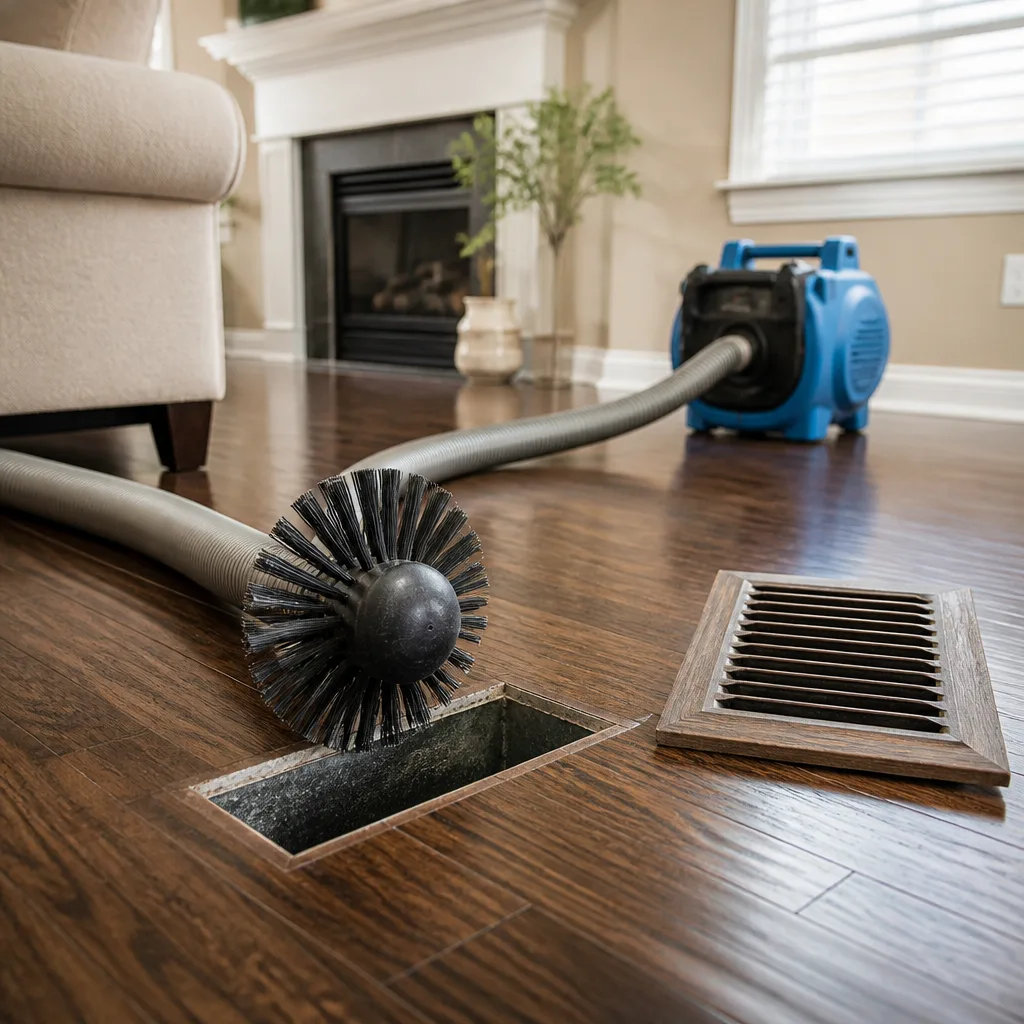 Whole-home duct cleaning
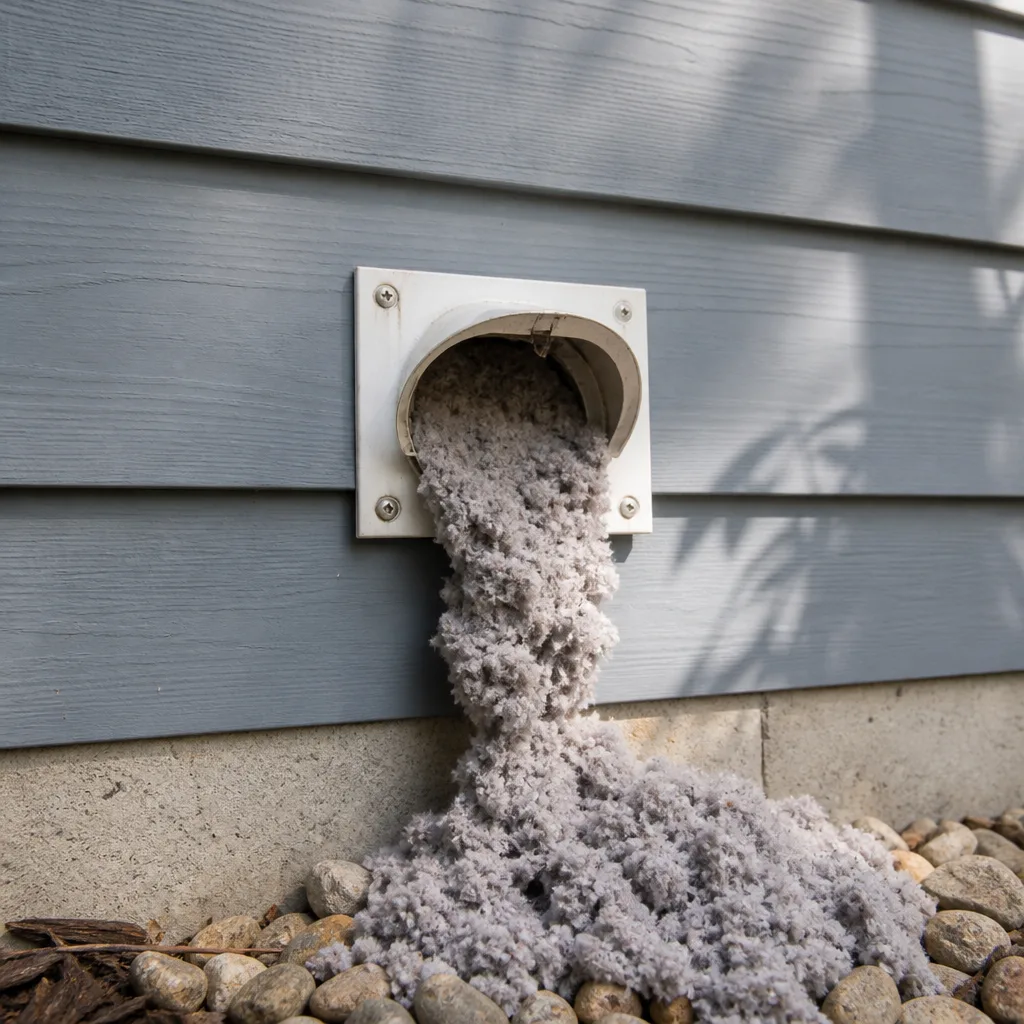 Dryer vent cleaning
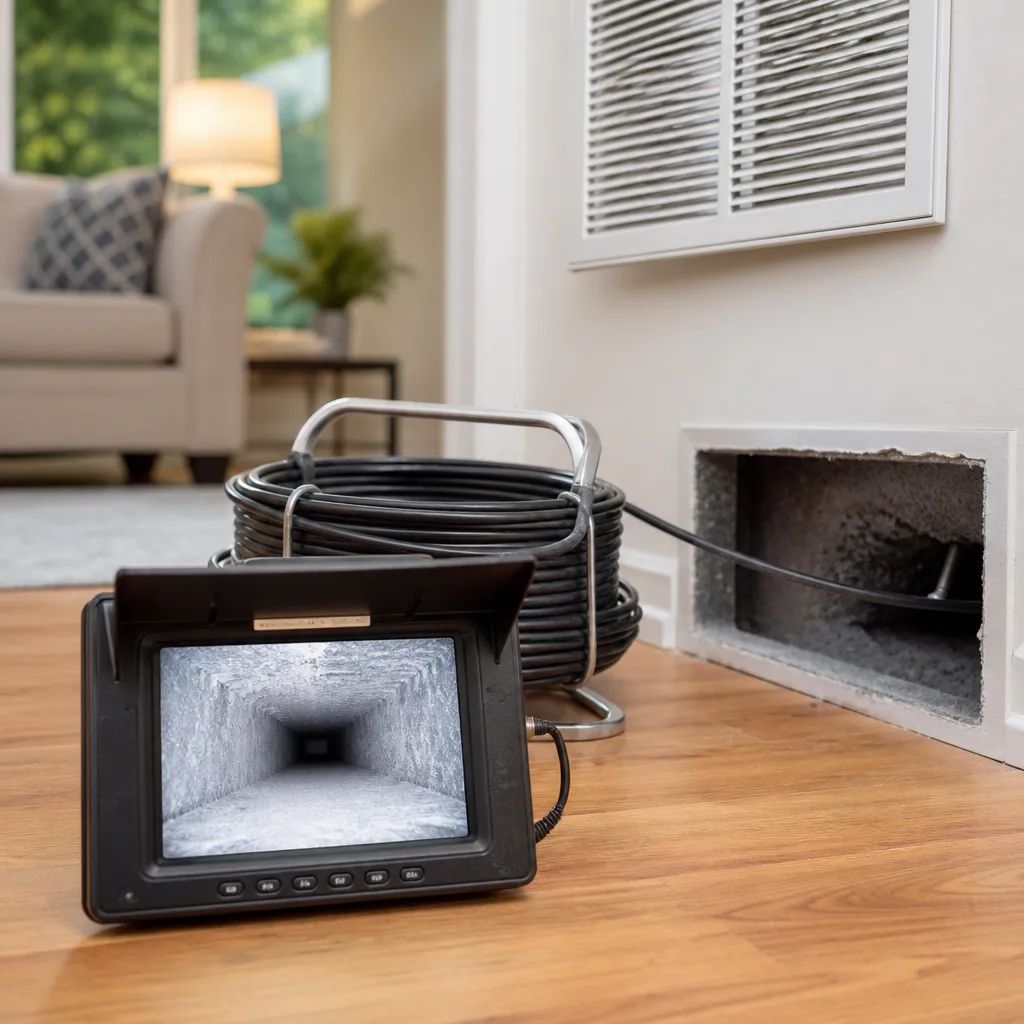 Camera inspection
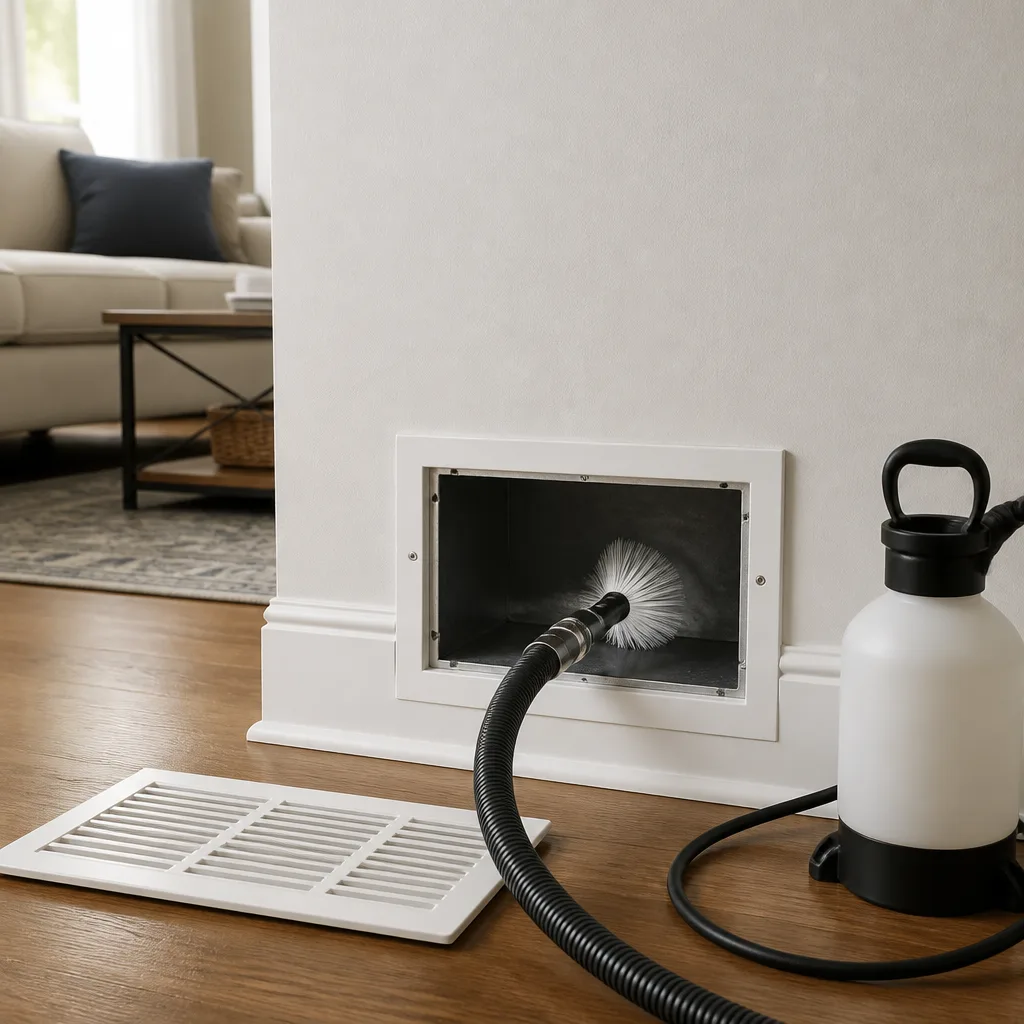 Sanitizing & deodorizing
Whole-system duct and dryer vent check with before-and-after photos - you see exactly what came out of your vents
That "$99 whole-house special" is a bait ad - the real number appears once they are in your hallway, or the "clean" is a shop-vac at the register. We photograph the inside of your ducts before and after instead.
DIY vs Professional Air Duct Cleaning: The Alpharetta Homeowner’s Decision Guide
There are exactly two things a homeowner can successfully do themselves in their duct system, and about eight things that look doable but quietly make the problem worse. Every month, someone in Alpharetta calls us after spending a Saturday attempting what they thought was a straightforward duct cleaning, only to discover their allergies flared up, their energy bill ticked upward, or a musty smell got bolder instead of fading. This guide draws an honest line between what’s genuinely worth doing yourself and what’s better left to our Air Duct Cleaning services with negative-pressure equipment. You’ll get specific costs, real Alpharetta context like our humid summers and crawl-space construction, and a practical framework for deciding which side of the line your house sits on.
Quick Answer
DIY air duct cleaning in Alpharetta is genuinely sufficient for exactly two tasks: wiping down vent covers and replacing your HVAC filter on schedule. Everything else, including cleaning the duct runs themselves, the return plenum, or the air handler, requires professional negative-pressure equipment to do safely without dislodging debris deeper into the system. For most Alpharetta homes with pets, kids, or recent renovations, a professional cleaning costs $450 to $850 and is worth it roughly every three to five years.
Styles & brands we work with
Table of Contents
- What DIY Can Actually Do (and What It Can’t)
- Why Consumer Vacuum Attachments Make Things Worse
- The Real Cost Comparison: DIY vs Professional in Alpharetta
- Home Conditions That Change the DIY Equation
- How Professional Negative-Pressure Cleaning Actually Works
- How Often Do Alpharetta Ducts Really Need Cleaning?
- Signs Your Ducts Need Attention (That You Can Check Yourself)
- Filter Selection: The One DIY Task That Pays Off All Year
What DIY Can Actually Do (and What It Can’t)
Let’s be direct about this. The ductwork in your Alpharetta home is a closed system of sheet metal, flex runs, and connections that moves air from your HVAC unit to every room in the house. The parts you can see, the vent covers and the air filter, are the parts you can clean. The parts you can’t see, the main trunk line, the branch runs, the return plenum, and the air handler itself, are where the real buildup lives.
Here’s what DIY genuinely accomplishes:
- Removing and washing vent covers. Soak them in warm soapy water, scrub with a soft brush, dry thoroughly, and reinstall. This handles dust and pet hair that collects on visible surfaces and improves airflow slightly. It takes about an hour for a typical 2,500-square-foot house.
- Replacing your HVAC filter on a disciplined schedule. In Alpharetta’s climate, where air conditioning runs hard from May through September and the system kicks on during warm winter spells too, we recommend checking the filter monthly and replacing it every 30 to 90 days depending on the MERV rating and how many pets you have. More on filter selection below.
That’s the complete list of DIY duct tasks that help rather than harm. Here’s what looks doable but isn’t:
- Pushing a shop vacuum hose into the vent openings
- Using a drill-powered brush or a “duct cleaning wand” from a home improvement store
- Removing a section of flex duct to “look inside”
- Spraying disinfectant or deodorizer into the vents to address smells
- Using a leaf blower to “blow out” the system
- Trying to reach the air handler or evaporator coil with household tools
Our team has seen each of these attempted in Alpharetta homes from Crabapple to Johns Creek. The outcomes range from ineffective to genuinely damaging. The reason isn’t that homeowners lack effort or intelligence. It’s that the physics of ductwork require equipment most households don’t own.
Why Consumer Vacuum Attachments Make Things Worse
A consumer-grade shop vacuum generates suction at the nozzle tip. It’s excellent at picking up debris its nozzle can reach, which is typically the first three to six inches of the vent opening. That’s fine for visible dust. But the vent opening connects to a branch run that travels through your walls, floors, or attic for ten to forty feet before joining the main trunk line. A shop vac simply can’t reach that far, and attaching a flexible hose to snake deeper creates a new problem.
When you push a flexible vacuum attachment into a duct run, the agitation dislodges material that was stuck to the duct walls. Some gets captured by the vacuum. The rest breaks into finer particulates that go airborne. Because the vacuum isn’t sealed to the duct system, that loose dust and debris drifts deeper into the runs, settles in the trunk line, or gets pulled toward the air handler when the blower cycles on. You’ve taken a contained buildup and turned it into an active circulation problem.
In Alpharetta’s humid climate, this stale debris settling in duct interiors can absorb moisture from the air and create the conditions for musty odors. Homes with a crawl space are especially vulnerable, because the duct runs there are exposed to humidity that condenses on the outside of the metal and finds its way in. If you disturb that layer with a household vacuum, you’re often stirring a problem rather than solving one.
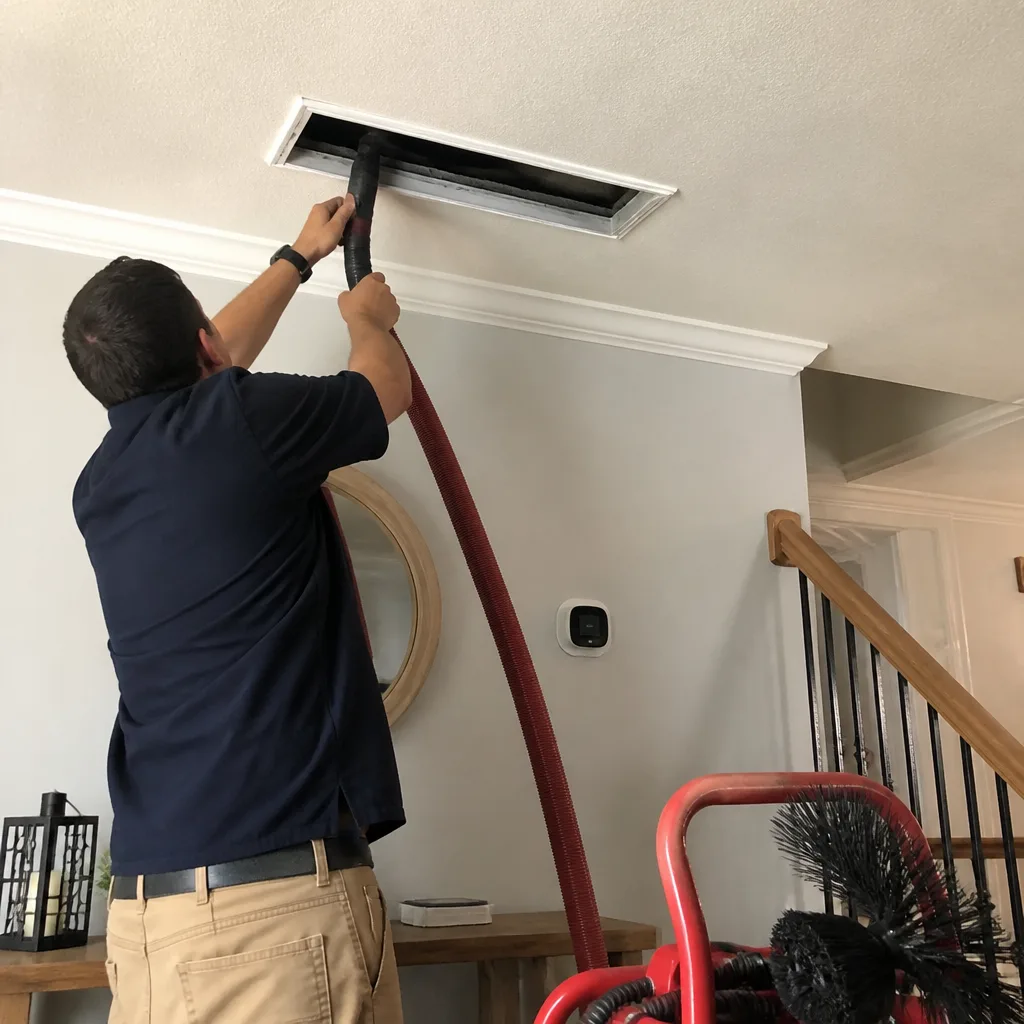
Professional cleaning solves this with a fundamentally different approach: a negative-pressure system uses a powerful vacuum connected directly to the duct trunk line, pulling air backward through the entire system while a technician agitates the walls with brushes, compressed air, or a Rotobrush system. The airflow direction guarantees that dislodged material moves toward the vacuum, not deeper into the system. The vacuum is rated for the length of the run and the capacity of your system. This isn’t equipment you can rent effectively, and even if you could, setting up a proper seal requires experience.
The Real Cost Comparison: DIY vs Professional in Alpharetta
Let’s put honest numbers on both approaches for a typical single-family home in Alpharetta, whether you’re in Windward, Milton, or Roswell-adjacent neighborhoods. The numbers below reflect the local market as of our most recent service data.
DIY Approach: What You’ll Actually Spend
- Shop vacuum with HEPA filter: $120 to $250 if you already own one. A standard household vacuum is not suited for duct work and will likely damage its motor trying. So figure a purchase unless you own a true HEPA shop vac.
- Vent brush kit or duct cleaning wand: $25 to $60 at a retailer. These are marketed as duct cleaning tools but typically reach only the first few feet of each run.
- Vent cover cleaning supplies: $15 to $30 for degreaser, microfiber cloths, and a scrub brush. This part is legitimately useful.
- Labor time: Plan four to six hours for a first attempt across a two-story home, including moving furniture, removing and reinstalling vent covers, and the inevitable troubleshooting. If you value your weekend time at any reasonable hourly rate, this is a $200 to $400 hidden cost.
- Re-cleaning cost if the attempt goes wrong: If dislodged debris triggers worsening allergies, musty smells, or visible dust around registers, the professional service you eventually book will still cost full price, typically $450 to $850 in Alpharetta. You won’t have saved anything, and the problem may have extended to more of the system.
Professional Approach: One Cost, One Day
- Whole-home air duct cleaning in Alpharetta: $450 to $850 depending on system size, number of returns, crawl space access, and whether dryer vent cleaning is added. That price includes the full negative-pressure cleaning, agitation of the trunk and branch lines, and post-job inspection.
- Dryer vent cleaning add-on: $125 to $200, and worth considering if you’re having duct cleaning done anyway.
- Time: Four to eight hours for a professional crew depending on house size, crawl space condition, and whether multiple units are involved. The homeowner doesn’t work; they’re reading, cooking, or supervising homework while the crew handles it.
- The 365-day factor: A reputable Alpharetta duct cleaning company that offers a workmanship guarantee will return to fix anything that wasn’t done right within a year. A DIY job has no such guarantee, and if you missed something, you’re redoing it yourself.
So the honest comparison for Alpharetta homes is this: a DIY attempt costs somewhere between $75 and $300 in direct dollars plus four to six hours of your time, but has a meaningful chance of making the problem worse and delivering no durable improvement at all. A professional service costs $450 to $850, takes your time only to make the appointment, and leaves you with photographic proof of the work plus a written guarantee. The “savings” from DIY are only savings if the job actually works.
Home Conditions That Change the DIY Equation
Some homes can skip duct cleaning for five years or more and never see an issue. Others need it every two to three years without exception. Here’s how to place your Alpharetta home on that spectrum.
Conditions That Make DIY Attempts Risky
Post-renovation dust. If you’ve had drywall work, flooring replacement, kitchen remodeling, or painting done in the last six months, your ducts likely hold construction dust that includes silica, wood particles, and adhesive residue. Drywall dust is especially fine, extremely abrasive to HVAC components, and a known respiratory irritant. Pushing a household vacuum into that environment is like sweeping a dusty floor with a leaf blower. Professional negative-pressure cleaning is designed to capture fines this small, and a HEPA-filtered vacuum is a standard part of the job. In Alpharetta, where home renovations are constant from Crabapple to the downtown historic district, this is one of the most common reasons we’re called in.
Pest intrusion. If you’ve had evidence of mice, rats, squirrels, or roaches anywhere near your ductwork, do not attempt to clean it yourself. Rodent droppings in duct runs are a known vector for hantavirus and other serious pathogens. Professional cleaning involves containment procedures, removal of the contaminated material, and sanitization with appropriate products. This is not a Saturday project, and the health risk isn’t hypothetical. Homes in Alpharetta with crawl spaces, common in older subdivisions, are particularly susceptible to critter access through small gaps in the foundation or duct connections.
Visible microbial growth. If you look into your vent or return and see dark spotting, fuzzy patches, or a persistent musty smell that doesn’t clear with a filter change, you may be dealing with mold or mildew. Alpharetta’s summer humidity, typically 70% or higher from June through September, creates perfect conditions for this in homes with poor dehumidification, crawl space ductwork, or oversized AC units that short-cycle. Mold in ductwork requires specific remediation protocols. A DIY attempt will disturb spores and spread them through the living space. Call a professional.
Crawl-space ductwork. Homes with duct runs in a vented crawl space are far more exposed to humidity, pest intrusion, and duct leakage than homes with attic or interior ductwork. The air in the crawl space is the air being pulled into your living space through leaks in those ducts. If your Alpharetta home has this configuration, professional inspection and cleaning is not optional; it’s part of responsible homeownership, because you’re breathing whatever is in that crawl space.
Conditions Where DIY Maintenance Is Sufficient
Newer construction with clean runs. If your home is less than seven years old and you’ve changed filters consistently, you probably don’t need full duct cleaning at all. Keep the vent covers clean, stay on a filter schedule, and save the service call for when conditions change.
Homes with no pets or smokers. The absence of pet dander, pet hair, and tobacco smoke removes most of the organic material that accumulates in ducts. Dust happens everywhere, but without those sticky bonding agents, it tends to stay suspended and get captured by the filter rather than clinging to duct walls.
Hardwood or tile throughout with minimal rugs. Carpeting generates and holds far more airborne particulate than hard surfaces. Alpharetta homes that are fully hard-floored generally see slower duct buildup.
How Professional Negative-Pressure Cleaning Actually Works
Understanding what the professional equipment does, versus what a household vacuum does, is the single most useful thing you can learn from this guide. Here’s the process a quality Alpharetta duct cleaning company follows:
- System inspection. The technician examines your HVAC unit, return plenum, supply trunk, and representative branch runs. They’ll identify the system size, the filter type, and any obvious problems like collapsed flex, disconnected runs, or visible pest evidence.
- Seal and connect the negative-pressure vacuum. A large vacuum unit, typically rated at 15,000 CFM or higher by brands like Rotobrush or Nikro, is connected to the duct system with a sealed attachment at the main trunk line or the return. This creates continuous suction through the entire system for the duration of the job.
- Agitation of branch runs. With suction running, the technician works through each vent opening one at a time, using compressed air or a rotating brush to dislodge material stuck to the duct walls. Because the system is under negative pressure, everything dislodged flows toward the vacuum instead of into the room.
- Plenum and air handler attention. The return plenum collection chamber, which often holds the worst buildup, is cleared with manual agitation while negative pressure remains active. Some technicians will also inspect and, where accessible, clean the blower assembly and evaporator coil with approved products.
- Filter replacement or verification. The job isn’t complete until the system has a clean, correctly fitted filter in place. The technician should confirm the MERV rating and note the replacement date for you.
- Post-job verification. A quality company provides a visual inspection with the homeowner, and ideally photographs. Mortons Air Duct Alpharetta includes a photo of the cleaned plenum and representative runs before the crew leaves, so you see what was done, not just a receipt.
The equipment names matter because they represent the difference between a real cleaning and a surface dusting. Rotobrush, Nikro, Honeywell, Aprilaire, Abatement Technologies, and Guardsman all manufacture professional-grade equipment used by serious duct cleaning companies. A technician arriving with a shop vac and a brush attachment is not performing the same service, regardless of what the invoice says.
How Often Do Alpharetta Ducts Really Need Cleaning?
The answer depends far less on time and far more on what your home has been through. The National Air Duct Cleaners Association recommends cleaning every three to five years under normal conditions. But “normal” includes a lot of variables in Alpharetta.
A useful threshold for most families: if you can’t remember the last time the ducts were cleaned, it’s probably been long enough to justify an inspection. More specifically, plan for cleaning every two to three years if any of these apply:
- You have two or more pets with fur or feathers
- Anyone in the household has allergies, asthma, or a respiratory condition
- You’re within two years of a renovation or major repair project
- Your home has crawl-space ductwork
- You’ve had a pest issue in the attic or crawl space
- Your HVAC filter shows visible buildup within 30 days of replacement
For Alpharetta homes without pets, without recent construction, and with attic or interior ductwork, every four to five years is generally sufficient. The best practice is to check your air filter monthly and use its condition as a proxy for what’s accumulating in the system. A filter that’s dark and clogged after 30 days means a lot of particulate is moving through the house, and some of it is staying in the ducts.
Signs Your Ducts Need Attention (That You Can Check Yourself)
Before you call anyone, spend ten minutes doing a visual inspection you can do yourself. Here’s what to look for in your Alpharetta home:
- Remove a vent cover in a main living area and look inside with a flashlight. Duct walls that show a visible layer of lint, dust, or debris mean buildup is present. A thin dust film is normal. A fuzzy coating is not.
- Check the return air vent, usually the largest grate in the house, often in a hallway. This is where bypass air gets pulled back into the system, and it gathers debris quickly. If the filter behind it is dark and you can remember changing it less than two months ago, your home’s air is carrying a lot of particulate.
- Watch the dust patterns in your home. If you dust the tops of door frames, ceiling fan blades, and bookshelves and see new dust settle within a week, the system may be circulating particulates rather than trapping them.
- Listen for airflow changes. When a room that used to heat or cool evenly now runs warmer or colder than its neighbors, a partially blocked duct run may be the cause. Collapsed flex duct, disconnections in the crawl space, or a blower wheel loaded with dust can all do this.
- Notice smells after the system kicks on. A musty or stale odor that appears only when the HVAC runs suggests material in the ducts or plenum, not a household source.
None of these checks require special tools or training. What they require is attention. The homeowner who notices these signals early can often address a small issue before it becomes a larger one, whether through a simple filter change, Air Duct Cleaning in Alpharetta, or a conversation with a professional to interpret what they’re seeing.
Filter Selection: The One DIY Task That Pays Off All Year
If you do only one thing yourself for your duct system, make it filter discipline. The filter is the first line of defense, and in Alpharetta’s long cooling season, it traps significantly more material than a filter in a cooler climate would. Yet we regularly see homes where the filter hasn’t been changed in six months or longer.
Here’s the practical guidance for Alpharetta homes:
- Choose the MERV rating your system can handle. MERV 8 is adequate for basic dust and pet dander. MERV 11 captures finer particles, including most mold spores and finer dust. MERV 13 captures nearly everything but creates meaningful airflow resistance. Not every HVAC system can handle MERV 13 without strain on the blower, especially older or undersized units common in some Alpharetta homes built in the 1990s and early 2000s. If you’re unsure, use MERV 8 to MERV 11; don’t move to MERV 13 unless you know your system can breathe.
- Set a replacement interval based on your household. No pets, no smokers, hard floors: every 90 days is fine. One or two pets or moderate dust: every 60 days. Multiple pets, allergies, or construction activity: every 30 days. Write the install date on the filter frame with a marker so no one has to guess.
- Check once a month regardless. If the filter looks dark or clogged before the interval is up, replace it early. The filter is a wear item, not an annual commitment.
- Don’t run the system without a filter, ever. Not even for a day during a filter change. Running unfiltered pulls everything your filter would have caught directly into the blower assembly and the evaporator coil, where it bakes onto the coil surface and reduces system efficiency permanently until professionally cleaned.
Good filter discipline doesn’t replace professional duct cleaning, but it reduces how often you need it and improves system performance between cleanings. For Alpharetta families with kids and pets, it’s the most important 5-minute task in the house for indoor air quality.
Common Mistakes to Avoid
- Using a leaf blower to “clean” the ducts. This pushes debris out of the vents and into your living space, creates a false sense of completion, and can damage flex duct connections in crawl spaces. We’ve seen homes where this “cleaning” blew insulation particles into bedrooms.
- Spraying deodorizer or disinfectant into vents to fix odors. This masks a smell without removing its source, and some products leave a residue that attracts more dust. If the odor returns, you’ve spent money on perfume instead of a solution.
- Removing duct sections yourself for inspection. Without proper re-sealing, you’ve created an air leak that pulls crawl space air into your living space. Duct sealing is a professional repair, not a DIY reconnect.
- Renting a “duct cleaning machine” without understanding negative pressure. Consumer rental equipment rarely achieves the seal or the suction needed for real cleaning. The result looks active but accomplishes little.
- Skipping dryer vent work during duct cleaning. Many Alpharetta homes have dryer runs of 15 feet or more through floors and walls. A clogged dryer vent is a fire risk independent of house duct cleanliness. If you’re having HVAC ducts cleaned, ask about the dryer vent too.
- Replacing a clogged filter with a high-MERV filter the system can’t handle. Upgrade the MERV rating only with confidence that your blower is sized for it. A too-restrictive filter reduces airflow and increases energy use during Alpharetta’s hot months.
- Calling a duct cleaning company that offers a “$49 whole house special.” Honest professional duct cleaning in Alpharetta with real negative-pressure equipment and trained technicians doesn’t cost $49. If the price seems too good to be true, it usually describes a service that runs 45 minutes and touches only the vents. Ask what equipment they bring and what the total will be before they start.
See the difference
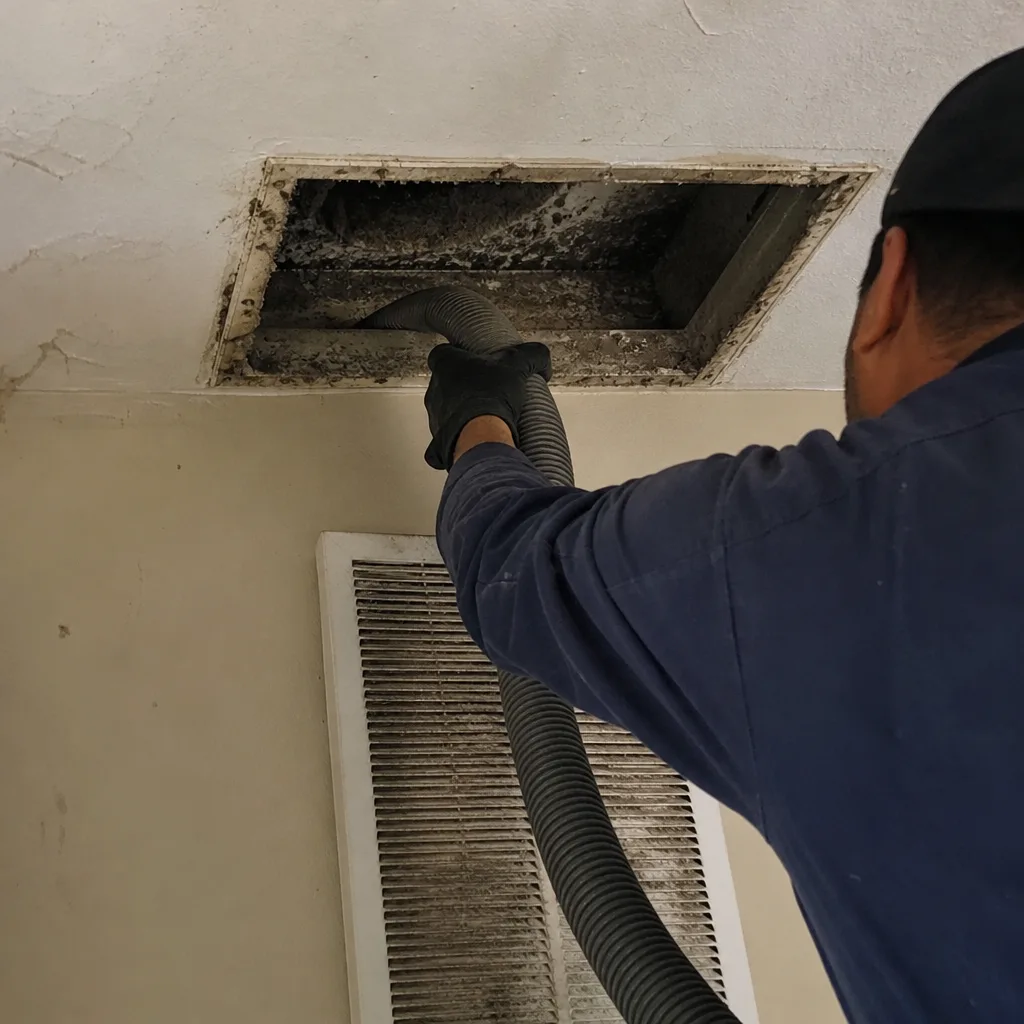 Before
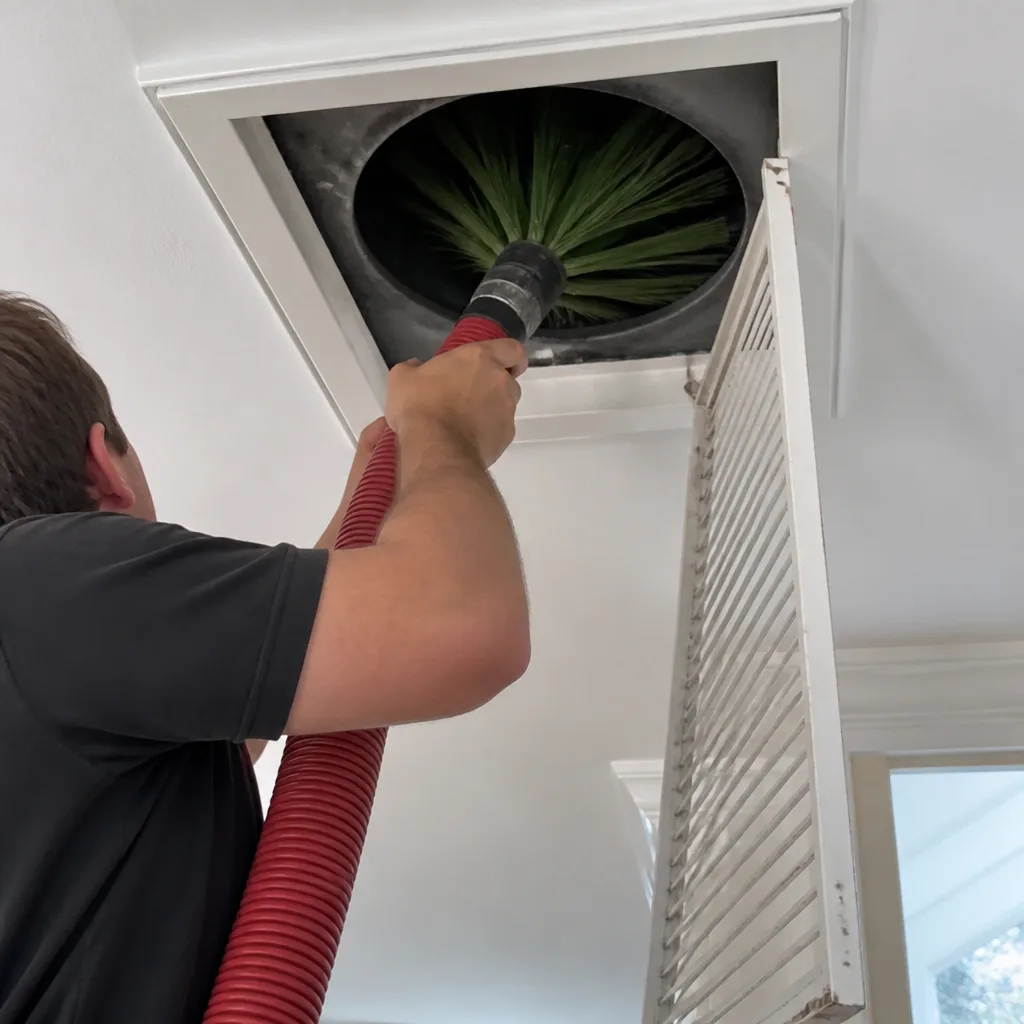 After
After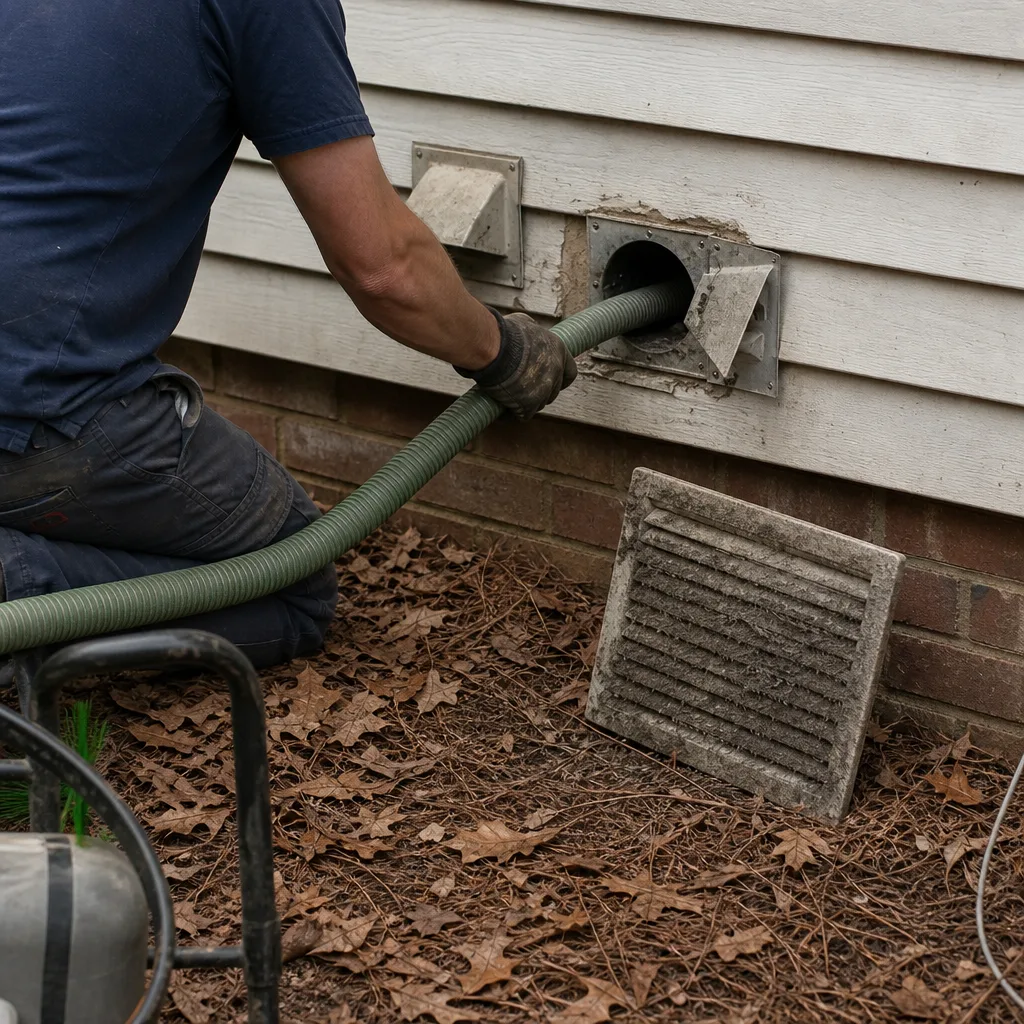 Before
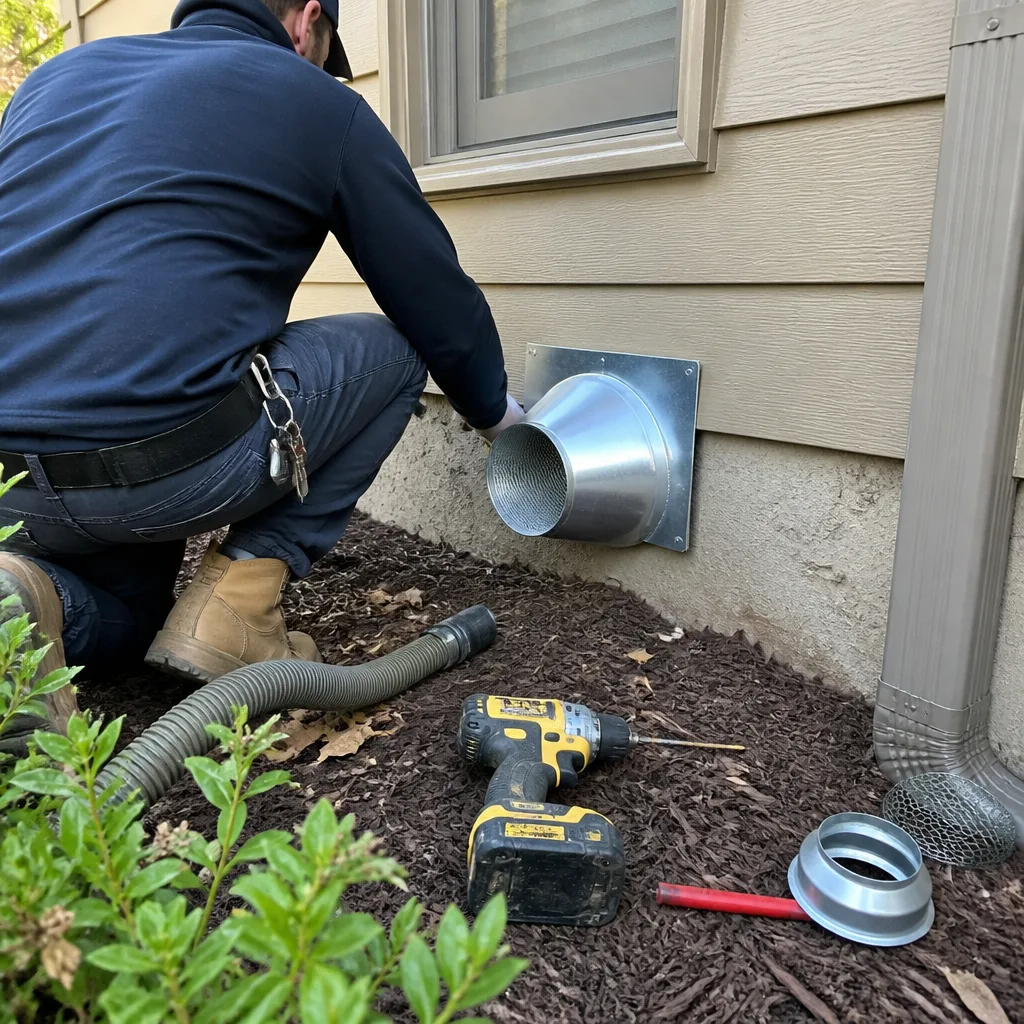 After
After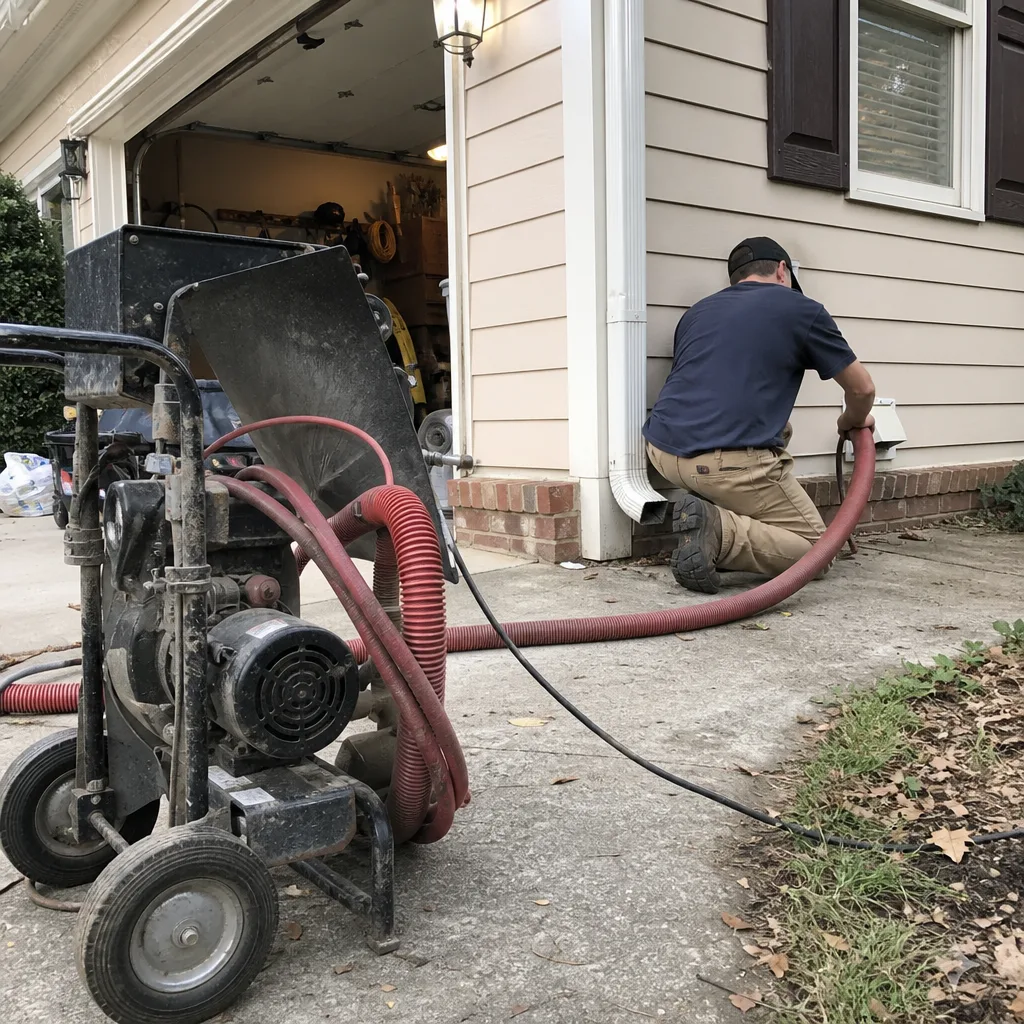 Before
 After
AfterWhen to Call a Professional
Call a professional duct cleaning company in Alpharetta when any of these apply: you see visible buildup on duct walls during a flashlight check, you smell mustiness that starts when the HVAC runs, you’ve completed a renovation in the last two years, you have pests in the crawl space or attic, your filter clogs within 30 days, or you simply can’t remember the last time the ducts were cleaned. None of these situations improve on their own, and several of them get genuinely worse with DIY intervention. Mortons Air Duct Alpharetta home offers free estimates in Alpharetta for a professional assessment. Call (762) 263-0408 and a live person will answer, walk you through what you’re seeing, and help you decide whether a full cleaning is warranted or whether simple filter and vent maintenance will serve you better this season.
Frequently Asked Questions
A legitimate whole-home air duct cleaning in Alpharetta costs between $450 and $850 for a typical single-family home, with the final price depending on system size, number of vents and returns, whether crawl space access is needed, and whether dryer vent cleaning is included. If you’re quoted less than $250 for a “whole house” cleaning, you’re almost certainly being sold a surface vent dusting, not a real duct cleaning. Call (762) 263-0408 for an exact written quote after we understand your home’s system, and estimates are free.
DIY duct cleaning is a good idea only for the two tasks it can actually do: washing vent covers and replacing the HVAC filter on a disciplined schedule. Anything beyond that, including pushing a vacuum hose into duct runs, dislodges debris without capturing it and often makes the problem worse. If those two tasks don’t address what you’re seeing or smelling, call a professional before attempting anything more.
Ask for visual verification before the crew leaves. A trustworthy Alpharetta duct cleaning company will show you the cleaned plenum and representative runs, ideally with photos. Mortons Air Duct Alpharetta provides a photo of the clean-up before the crew leaves, so you can see the condition of your system after the work, not just a signature on an invoice.
Cheaper quotes usually describe a different service. A legitimate negative-pressure cleaning requires a trained technician, professional equipment, and several hours of work. A company charging $79 or $99 is typically running a shop vac over vent covers and spending 45 minutes inside your home. The technology and the time can’t be delivered at that price point, and you’ll end up paying for a real cleaning later anyway.
In Alpharetta, where air conditioning runs heavily from May through September and humidity is high through the fall, most homes benefit from professional duct cleaning every three to five years. Homes with multiple pets, recent renovations, crawl-space ductwork, or family members with allergies should plan for every two to three years. Check your filter monthly, and let its condition guide the decision.
Yes, but only when the ducts actually hold allergens like pet dander, dust mite waste, pollen, and construction dust. If the buildup is present, a professional negative-pressure cleaning removes the reservoir those allergens have been drawn into, which means the HVAC system stops redistributing them through the house. Call (762) 263-0408 if you’d like us to inspect your system and tell you honestly whether cleaning is likely to help your specific situation.
Yes, indirectly. Heavy buildup on the evaporator coil or blower wheel forces the system to work harder to move air, which translates directly to higher energy consumption. A clogged system on a 95-degree Alpharetta day is spending your money fighting itself. Cleaning the ducts and the coil together often restores noticeable airflow and can help the system run as efficiently as it’s designed to.
The Bottom Line
DIY duct cleaning in Alpharetta is worth exactly as much as the two tasks it can genuinely accomplish: vent covers and filters. Everything else is a professional service because the equipment that does the job safely, a negative-pressure vacuum system with sealed airflow, doesn’t fit under a kitchen sink or in a rental agreement. For the Alpharetta homeowner with kids, pets, renovations, or crawl-space ductwork, the honest answer is that the $450 to $850 professional service, done once every three to five years and backed by a real workmanship promise, delivers the value that DIY only appears to. That’s the line, and now you know which side of it your house sits on.
Written by Paul Adeyemi, Owner at Mortons Air Duct Alpharetta, serving Alpharetta since 2005.