
Last updated October 15, 2026
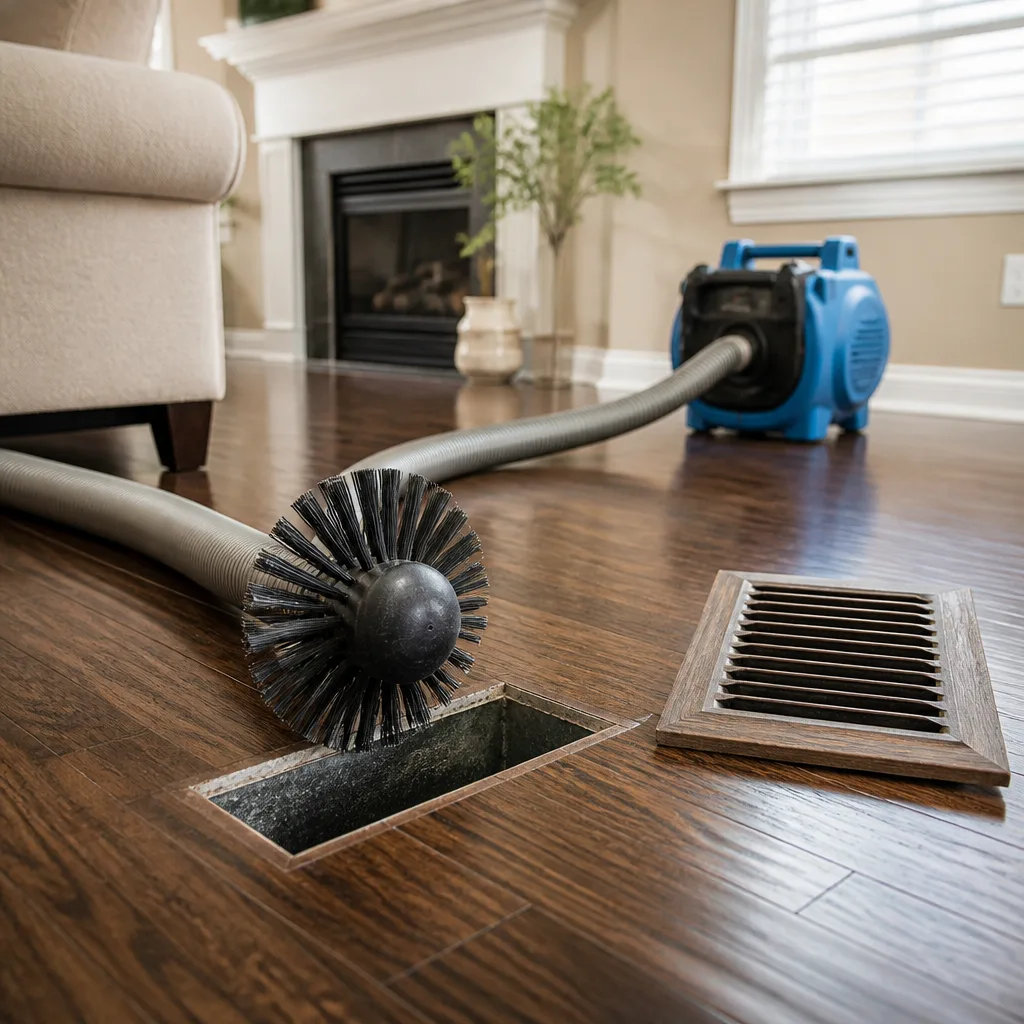 Whole-home duct cleaning
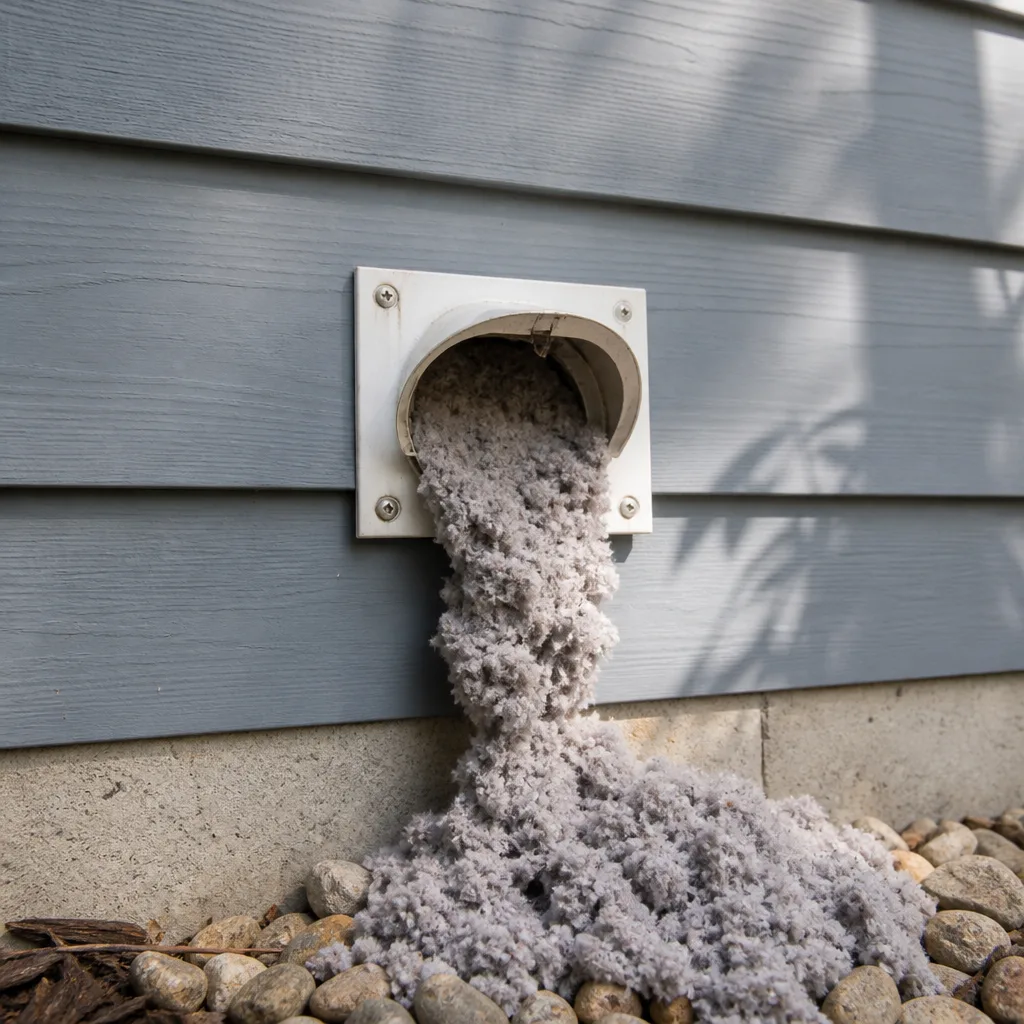 Dryer vent cleaning
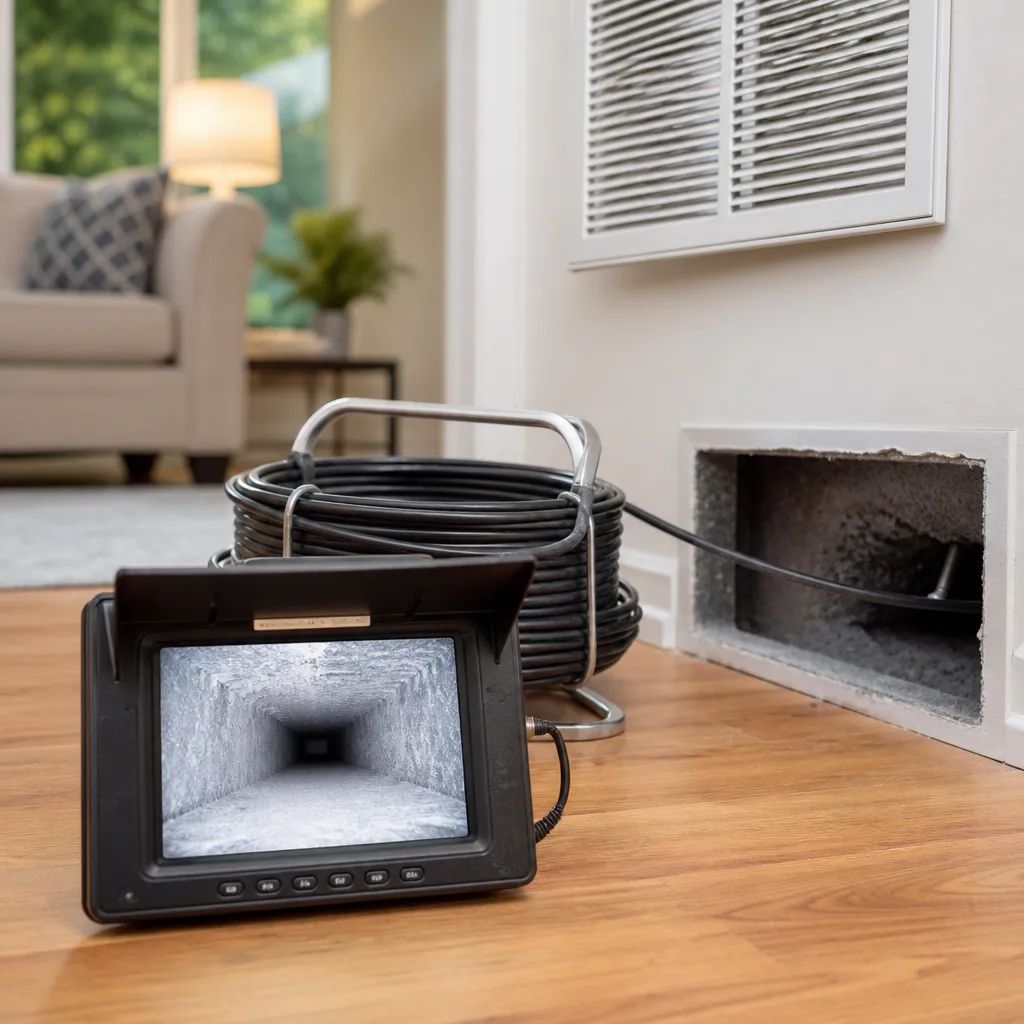 Camera inspection
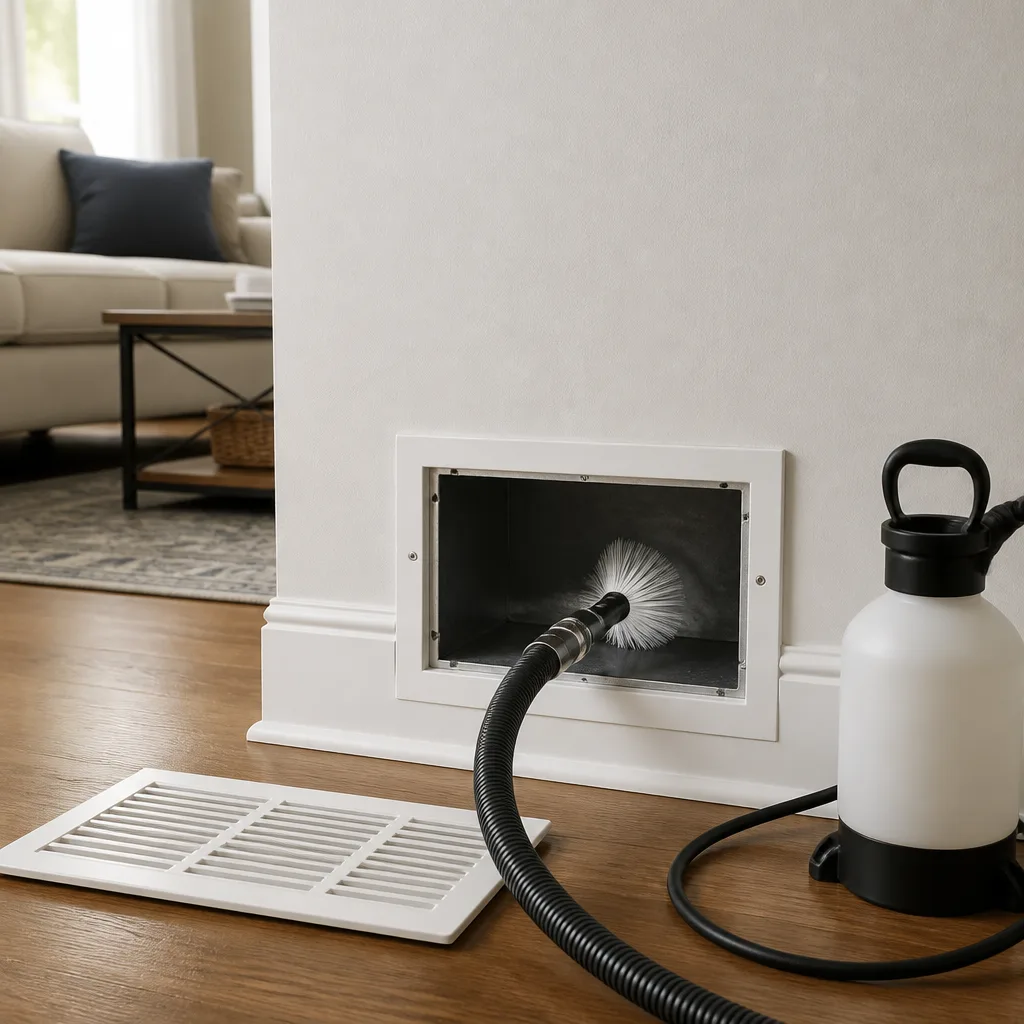 Sanitizing & deodorizing
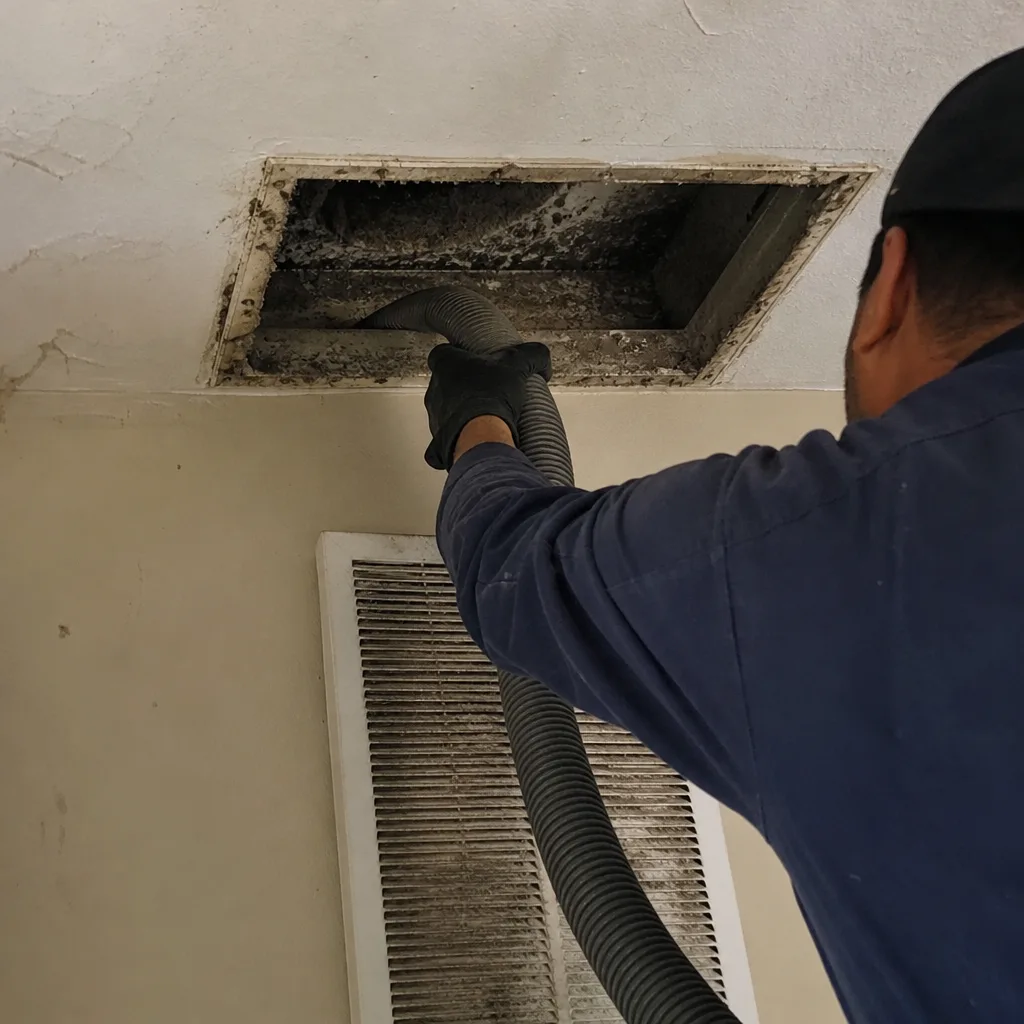
Whole-system duct and dryer vent check with before-and-after photos - you see exactly what came out of your vents
That "$99 whole-house special" is a bait ad - the real number appears once they are in your hallway, or the "clean" is a shop-vac at the register. We photograph the inside of your ducts before and after instead.
The Complete Guide to Air Duct Cleaning in Alpharetta
Alpharetta ranks among the highest pollen-count metros in the entire United States, yet most duct-cleaning guides read as if geography doesn’t exist. A homeowner in Milton, GA does not face the same duct conditions as a homeowner in Phoenix, and pretending otherwise leads to wrong advice, wasted money, and a house that still smells like last spring. This Air Duct Cleaning guide explains exactly how Alpharetta’s oak and pine pollen seasons, North Fulton crawl-space construction, and high-humidity summers interact with your ductwork, what professional cleaning actually removes, what a written upfront price protects you from, and how to evaluate any company before they park the van in your driveway. If you own a home in Alpharetta with kids, pets, or seasonal allergies in the household, this is the detail level you actually need.
Quick Answer
Air duct cleaning in Alpharetta, GA costs between $450 and $950 for a typical single-family home with one HVAC system, and it involves a truck-mounted or portable high-powered vacuum connected to your ductwork combined with agitation tools that dislodge debris caked onto duct walls. In Alpharetta’s pollen-heavy climate, homes with pets, kids, recent renovation, or crawl-space foundations typically need cleaning every 3 to 5 years. A professional clean takes 3 to 6 hours, should include a dryer vent cleaning recommendation if your laundry room has never had one, and must come with a written price before any work begins.
Styles & brands we work with
Table of Contents
- What Air Duct Cleaning Actually Does in a Home
- How Alpharetta’s Climate and Pollen Seasons Create Specific Duct Problems
- Crawl-Space Homes in North Fulton: The Moisture Factor Nobody Discusses
- Why Equipment Brands Matter: Rotobrush, Nikro, and the Shop-Vac Problem
- What a Written Upfront Price Protects You From
- How Often Should You Really Clean Your Ducts in Alpharetta?
- The 365-Day Done Right Promise: What Changes After the Crew Leaves
- Common Mistakes to Avoid When Hiring in Alpharetta
- When to Call a Professional
- Frequently Asked Questions
What Air Duct Cleaning Actually Does in a Home
Air duct cleaning is the process of removing dust, debris, pet dander, pollen, and sometimes mold from the interior surfaces of your HVAC system’s supply and return air ducts, registers, grilles, and the air handler itself. In a typical Alpharetta home, that means cleaning every duct run that carries conditioned air from your furnace or air handler to the rooms where your family sleeps, eats, and plays, then back again through the return side.
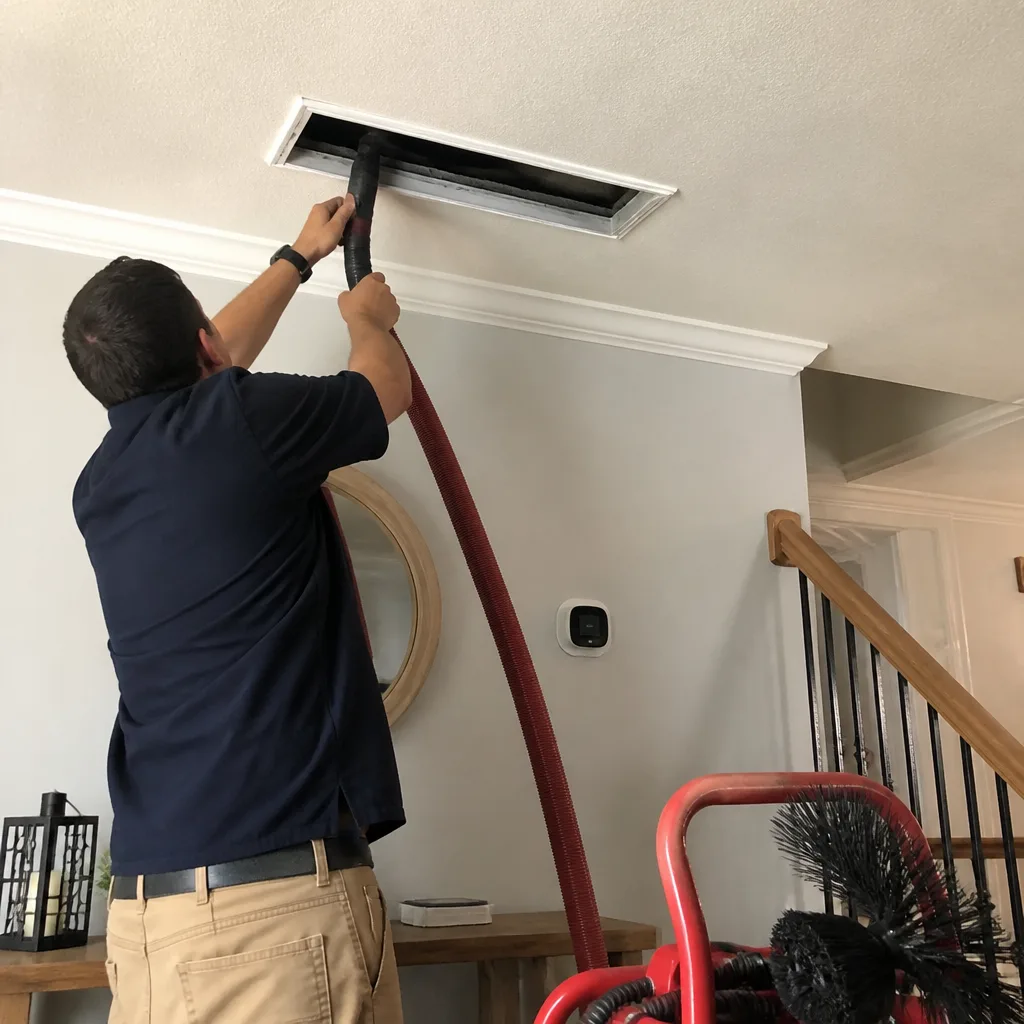
A proper clean involves more than vacuuming the vent covers. The technician connects a high-powered vacuum system to your ductwork to create negative pressure, then uses agitation tools, powered brushes, and compressed air wands to knock debris loose from the duct walls so the vacuum can pull it out. The work should also include cleaning the blower motor, the evaporator coil if accessible, and the return air plenum. What a real professional does not do is stick a shop-vac hose a few feet into a vent and call it done. That’s a visual touch-up, not a clean.
Here is what a professional-grade clean in Alpharetta should include, step by step:
- Pre-inspection of the full system, including a camera look inside supply and return ducts, to identify the type and volume of debris and check for moisture problems.
- Protection of the home first: shoe covers on every crew member, drop cloths placed under work areas, and furniture and flooring protected before any hose comes inside.
- Sealing off each register and connecting the vacuum system to create negative air pressure throughout the ductwork.
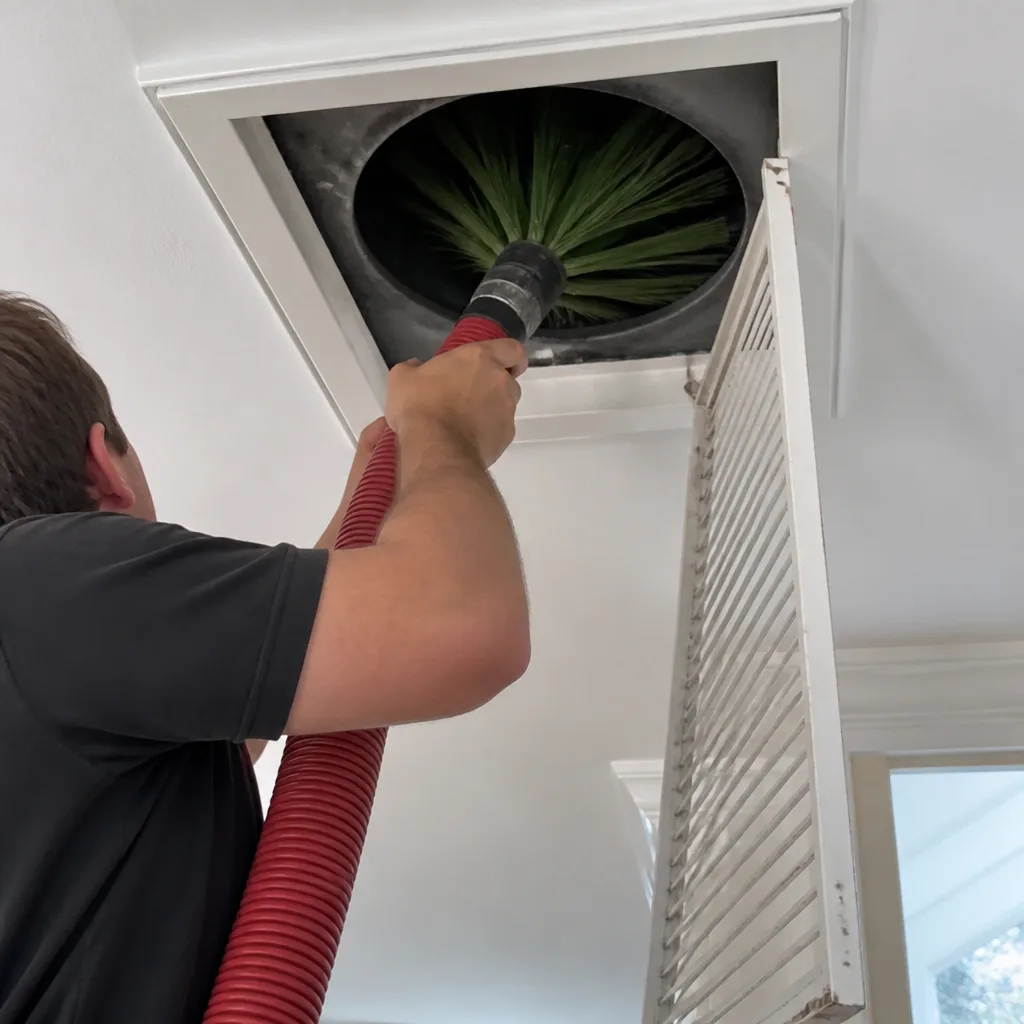
- Agitation pass with a Rotobrush or Nikro powered brush system through every accessible duct run to dislodge dust, pollen, and pet hair caked onto the walls.
- Air handler cleaning, including the blower motor and housing, where a surprising amount of Alpharetta pollen accumulates.
- Final walkthrough with the homeowner, including a photo of the clean-up to show the house was left as clean as it was found, if not cleaner.
For families in Alpharetta with kids or pets, the difference between a surface clean and a full-system clean shows up in air quality, allergy symptoms, and how fast the dust comes back on the furniture. A partial job simply doesn’t change the conditions that made you call in the first place.
How Alpharetta’s Climate and Pollen Seasons Create Specific Duct Problems
Alpharetta sits in the Atlanta metro area’s pollen belt, and the numbers here are genuinely abnormal by national standards. In early spring, oak and pine pollen counts routinely exceed 1,500 grains per cubic meter, numbers that trigger the highest alert categories on every pollen tracker. That pollen doesn’t stay outside. It gets pulled into your HVAC returns every time the system cycles, along with grass pollen in late spring and ragweed in the fall. Georgia’s growing season is long, which means something is pollinating from February through November in Alpharetta.
What this means for your ducts is straightforward but rarely explained: your HVAC system is the largest pollen distribution device in your home. All day, every day, the return vents pull in whatever is floating in your house, and the supply vents blow a portion of it back out. Some of that pollen settles onto your duct walls, where it sits for months or years. Spring pollen that settles in your ducts in March can become airborne again in July, stirred loose by humidity changes and air turbulence, and that’s why an Alpharetta family’s allergy season can extend long after the pollen count drops.
We also see a distinct pattern here: homes that had ducts cleaned in late winter stay noticeably less dusty through the spring and summer, because the ducts started the pollen season empty. Homes that roll into March with last year’s accumulated pollen see symptoms flare faster. The timing of your clean in Alpharetta genuinely matters. Plan it for late winter or very early spring, before the oak trees start their annual assault, and the system runs clean through the worst of it.
Add high humidity to the picture, and the story gets worse. Georgia summers run 70 to 90 percent relative humidity for months. When humid air passes through cooler ductwork, especially ductwork running through unconditioned spaces like attics and crawl spaces, condensation forms. Dust and pollen that are dry and loose become damp and sticky. That sticky film then captures more debris, which is exactly how the gray sludge we find inside many Alpharetta homes’ return ducts forms. A dry climate lets debris stay loose and easier to remove; a humid climate bakes it onto the metal.
None of this is alarmist. It’s the physical reality of owning an HVAC system in the Southeastern climate, and it explains why a one-size-fits-all national franchise’s cleaning protocol, designed around average American conditions, doesn’t line up with what Alpharetta homes actually need.
Crawl-Space Homes in North Fulton: The Moisture Factor Nobody Discusses
A large percentage of homes in Alpharetta and surrounding North Fulton County, particularly those built between 1980 and 2010 in subdivisions like Windward, Crabapple, and neighborhoods off Kimball Bridge Road, sit on crawl-space foundations. This matters for duct cleaning far more than most homeowners realize, and it’s a point almost no national cleaning guide mentions.
In a slab foundation home, the ductwork typically runs through the attic or between floors, where it stays relatively dry. In a crawl-space home, supply ducts often run through the crawl space itself, which in Georgia means they spend their entire life in a humid, dark, unconditioned environment. Here’s what happens as a result:
- Flex duct in a moist crawl space will sweat on the outside during summer, and over time that moisture works its way toward the inside of the duct.
- Damp interior duct surfaces trap pollen and dust far faster than dry ducts, building the sticky film mentioned above.
- Crawl-space humidity also encourages dust mites and mold spores, which become part of the air your system circulates.
- Rodents are a reality in North Fulton crawl spaces, and we regularly find signs of intrusion, droppings, and nesting debris inside duct runs that have not been cleaned in years.
- Open or poorly sealed crawl-space vents let outside air, pollen, and moisture directly enter the under-house environment.
The takeaway is not fear. It’s awareness. If your Alpharetta home has a crawl space, your ducts are working in a harder environment than your neighbor’s slab-foundation house, which means they may need attention sooner and the inspection step of your cleaning matters more. A good technician will open the crawl-space access, inspect the duct condition, check for tears or disconnected joints, and photograph what they find so you can see the before-and-after with your own eyes.
When we work in crawl-space homes across Alpharetta, the most common finding is moisture-compacted debris inside return ducts that pulls away in solid sheets rather than loose dust. That’s a signature of humid Georgia air at work, and it’s exactly the kind of local condition a generic cleaning service from outside the area won’t be looking for.
Why Equipment Brands Matter: Rotobrush, Nikro, and the Shop-Vac Problem
Walk into any hardware store and you can buy a shop-vac for $150. Walk into a professional duct cleaning company’s van, and you’ll see equipment that costs tens of thousands of dollars. The difference matters, and it’s visible in what remains in your ducts after the job. For a deeper look at this choice, see our DIY vs Professional Air Duct Cleaning: The Alpharetta Homeowner’s Decision Guide.
A shop-vac creates suction at the end of a hose. That’s fine for pulling loose dust from the first few feet of a duct run, but it does almost nothing for the packed, adhered debris stuck to the duct walls twenty feet in. It cannot create negative pressure across an entire duct system, which is what actually pulls debris from deep inside the runs and carries it out of the house. A shop-vac job gives you a clean-looking vent opening and a dirty duct system.
Professional duct cleaning in Alpharetta should use equipment built specifically for this work. We run Rotobrush and Nikro systems because they do two things simultaneously. First, they create system-wide negative pressure, typically at 2,000+ CFM, which means air is moving through every duct run toward the collection point. Second, they agitate the duct walls mechanically with powered rotating brushes or air-driven whips that physically break the debris bond. The combination of agitation plus airflow is what actually cleans a duct. Suction alone never does.
Think about it like washing a car. A hose alone gets some dirt off. A hose plus a soapy sponge gets all of it off. The brush and the water work together. Duct cleaning is the same. The professional system is the brush and the water. The shop-vac is the hose.
Other brands you may see in serious professional setups include Honeywell air quality products, Aprilaire filtration systems, and Abatement Technologies HEPA vacuum units. Guardsman makes the type of heavy-duty negative air machines used when dust containment matters, like in occupied homes with infants or seniors. None of these are what you’ll find at a weekend rental counter. If a company’s quote doesn’t mention what equipment they use, ask. A legitimate Alpharetta duct cleaner will tell you directly and be happy to show you the gear.
For homes with kids and pets, the equipment question is not about gadget fascination. It’s about whether pet hair, which is long, tangled, and sticky, actually leaves the duct or just gets disturbed and blown into the living room. A powered Rotobrush or Nikro system removes pet hair in full strands and clumps. A shop-vac leaves most of it behind. That’s the difference between waking up to a cleaner house and waking up to the same dust on the nightstand.
What a Written Upfront Price Protects You From
The single most common complaint we hear from Alpharetta homeowners who’ve hired duct cleaners before is not about the quality of the work. It’s about the price. Specifically, the gap between the price they were quoted on the phone and the total on the invoice when the crew finished. This gap is not an accident. It’s an industry pattern, and in metro Atlanta it’s more common than in most markets because the competitive pressure pushes some companies to advertise low teaser rates.
Here’s how the typical bait-and-switch works, step by step:
- You call and are quoted a low base rate, often as a per-vent price or a flat fee that sounds too good to be true, like $99 or $149 for the whole house.
- The crew arrives, walks the house, and discovers that your ducts are “heavily contaminated” and require an upgraded package.
- The blower motor needs cleaning, which is “not included in the base price.”
- The return ducts are “extra dirty” and need additional attention.
- The evaporator coil is “clogged” and will cause a failure if not addressed today.
- The final invoice lands at $800 to $1,500 for a job you thought would cost $149.
Every single one of those steps can be legitimate in a home that actually has those conditions. The problem is that the conditions are often discovered after the low price got the van in your driveway. In Alpharetta, where homes range from 1970s ranch-style houses off Rucker Road to 6,000-square-foot new builds in The Manor, no honest company can quote a real price before knowing the home’s square footage, number of systems, and duct configuration. A written upfront price means the company evaluated all of that before committing to a number.
A written price protects you from three specific things:
- The discovery upgrade: A crew “finds” a problem the salesman never mentioned and charges for it on the spot.
- The per-vent multiplier: A low per-vent price multiplied by a vent count you didn’t know your house had, which is a sneaky way to inflate the total.
- The scope creep: The job expands during the visit because the “base package” was never defined in writing.
When you call a company like Mortons Air Duct Alpharetta home, the conversation should end with a clear number and a written confirmation before anyone schedules the visit. If the company won’t put the price in writing, that’s your signal to keep looking.
How Often Should You Really Clean Your Ducts in Alpharetta?
The honest answer, without industry hype, is every 3 to 5 years for most Alpharetta homes. Here’s the reasoning behind that range, because the answer changes with your specific conditions:
- Every 3 to 4 years if you have two or more pets that shed, especially dogs and cats that spend time indoors. Pet dander and hair are the fastest-accumulating duct debris in Alpharetta homes.
- Every 3 to 4 years if anyone in the home has seasonal allergies or asthma, not because cleaning cures allergies but because it reduces the total particulate load circulating through the house.
- Every 4 to 5 years for a home without pets, with no smokers, and with regular filter changes. Alpharetta’s pollen load still builds up, just more slowly.
- Sooner than 3 years if you’ve had a major renovation, especially drywall work, flooring replacement, or crawl-space repairs, because construction dust penetrates ductwork and sets like concrete once it meets Georgia humidity.
- Sooner than 3 years if you had a rodent intrusion in the crawl space or attic, if you see visible mold inside ducts, or if you had a water event, like a pipe leak near the air handler.
- Immediately if you just moved into a home in Alpharetta and have no record of when the ducts were last cleaned. New homeowners often inherit the previous owner’s duct history, which is frequently none.
The biggest variable outside your control is Alpharetta’s pollen calendar. Oak pollen peaks in March and April. Pine pollen follows in April and May and forms that yellow-green film on cars and windows. Grass pollen runs through spring and summer. Ragweed hits in the fall. That’s an eight-month pollen exposure window for your HVAC system, which is far longer than the national average. Your ducts are the reservoir where that pollen waits to be recirculated.
One more specifically local factor: many Alpharetta neighborhoods have mature hardwood lots, oaks and maples 50 to 100 years old, which produce significantly more spring pollen than the newer clear-cut subdivisions in South Forsyth. If you live in a neighborhood off Providence Road or Hopewell Road with massive oak canopies, your home’s pollen load is higher than a newer neighborhood without mature trees. That’s not a reason to move. It’s a reason to track your cleaning schedule more carefully.
The 365-Day Done Right Promise: What Changes After the Crew Leaves
Most duct cleaning transactions end the moment the truck pulls out of the driveway. You paid, you got a receipt, and if something doesn’t seem right a month later, you’re on your own. That’s the standard model, and it’s why so many Alpharetta homeowners have a bad story about a previous duct cleaner.
A 365-Day Done Right Promise changes the relationship. It means the company’s obligation doesn’t evaporate when the invoice is paid. If the job wasn’t done right, if a section of duct wasn’t fully cleaned, if a vent cover was left loose, if the system doesn’t look or perform the way it should, you call and the company comes back and makes it right. Full stop. Not a pro-rated refund. Not a customer service runaround. A return visit to fix the problem.
Why does this matter in a practical sense for a family in Alpharetta? Because duct cleaning is not a perfectly observable service. You can’t stand inside your ducts. You can’t watch every foot of every run get cleaned. You rely on the camera inspections, the before-and-after photos, and the company’s word. A promise with teeth behind it means the company has incentive to get it right the first time, because coming back costs them time and money, and they know the phone number that matters is yours.
As part of the Cedarwell family of independently owned companies, Mortons Air Duct Alpharetta works to the Cedarwell Care Promise on every single job. That means the C.A.R.E. values govern how the crew behaves inside your home: shoe covers and drop cloths before anything else happens, quiet tools when a baby is napping down the hall, pet-safe product choices where available, and the dog on the floor is noticed and accounted for before the front door opens all the way. The photo of the clean-up before the crew leaves is not a marketing gesture. It’s proof. You see the floors as they were found, and if they don’t look right, you say so before anyone drives away.
A standard one-time clean gives you clean ducts and a goodbye. The promise model gives you clean ducts and a relationship that extends a full year past the visit. In a market like Alpharetta, where humidity means debris re-forms faster, that ongoing relationship has real value.
Common Mistakes to Avoid When Hiring in Alpharetta
The mistakes below are the specific ones we see from Alpharetta homeowners who call us after a bad experience with another company. Learn from their frustration instead of repeating it.
- Hiring on price alone without a written quote. The lowest quote in Alpharetta is often the highest final bill. A written price before work starts is non-negotiable. If they won’t write it down, hang up.
- Confusing a vent vacuuming with duct cleaning. A crew that spends 45 minutes on a 3,000-square-foot house did not clean your ducts. They vacuumed the vent openings. A thorough clean takes 3 to 6 hours.
- Ignoring the crawl space. In Alpharetta and North Fulton, more than half the homes we service have crawl-space duct runs. If your quote doesn’t include an inspection of the crawl-space ducts, you’re not getting a complete service.
- Scheduling in the middle of pollen season without a plan. A duct cleaning in late April, at the peak of oak and pine pollen, means the system starts re-collecting pollen the same week. Late winter and early spring are the strategic windows in Alpharetta.
- Not asking about equipment. “We clean ducts” is not an answer to “What equipment do you use?” If the answer doesn’t include the name of a real system like Rotobrush or Nikro, you’re probably getting a shop-vac job.
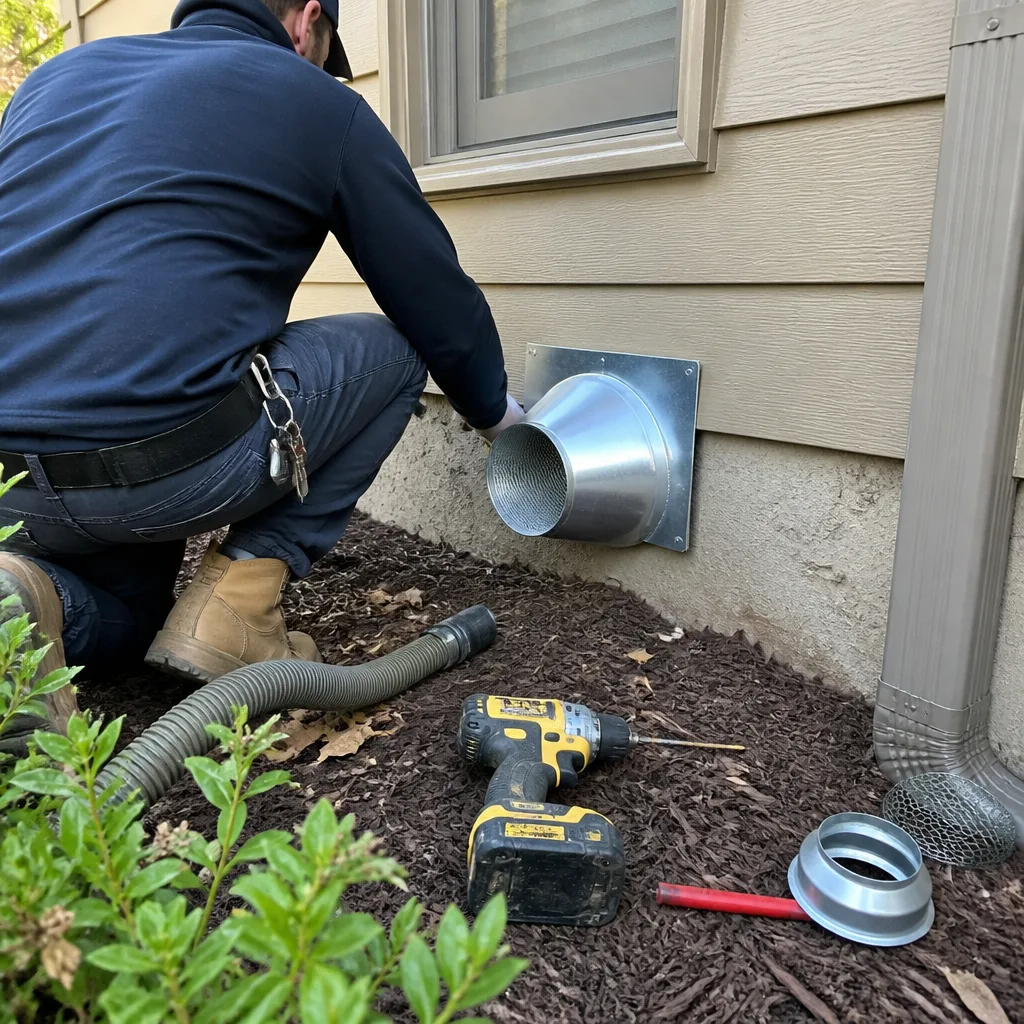
- Not doing the dryer vent at the same time. Your dryer vent is a separate duct run that carries hot, lint-laden air out of the house. If you’re already paying for a duct cleaning visit, adding a dryer vent cleaning at the same time is the most cost-efficient way to address both systems.
- Forgetting to change the HVAC filter after the clean. A clogged filter will re-contaminate freshly cleaned ducts within weeks. Change the filter the day of your cleaning, and keep a fresh one on hand.
When to Call a Professional
Call a professional if you can see dust or debris blowing from supply vents when the system runs, if you see visible mold growth inside the ducts or on the vent covers, if your home gets dusty within days of cleaning, if anyone in the family has unexplained allergy symptoms that worsen at home, if you’ve had a recent renovation, or if you bought an Alpharetta home with no duct cleaning history. Also call if you notice a musty smell when the HVAC runs, which in Georgia often points to moisture in the duct system rather than the ducts themselves. If you have a crawl space and have never had the ducts inspected, that’s a reason to call on its own. Air duct cleaning in Alpharetta is a scheduled service, not an emergency, so you have time to get a written quote and compare. Mortons Air Duct Alpharetta offers free estimates in Alpharetta – call (762) 263-0408.
Frequently Asked Questions
Air duct cleaning in Alpharetta typically costs between $450 and $950 for a single HVAC system in a home up to 3,000 square feet. Homes with two systems, like many larger houses in The Manor or Country Club of the South, can run $800 to $1,500. The price depends on home size, number of systems, duct accessibility, and whether crawl-space ductwork is involved. For an exact quote on your Alpharetta home, call (762) 263-0408 – estimates are free and the price is written before any work starts.
Cheaper quotes usually come from companies that plan to upsell you after the crew arrives, often starting with a low per-vent teaser rate that doesn’t include the air handler, return ducts, or coil cleaning. Honest pricing in Alpharetta is a whole-system price that accounts for the home’s actual conditions before the visit. If a quote is dramatically below $450 for a full home, ask what is not included and get that answer in writing before scheduling.
A proper air duct cleaning takes 3 to 6 hours for a typical single-family home in Alpharetta with one HVAC system. Homes with two systems or extensive crawl-space duct runs can take a full day. Any company claiming they can thoroughly clean a home’s ducts in under an hour is not cleaning the ducts – they are vacuuming the vent openings.
Air duct cleaning can reduce the total amount of pollen, dust, and pet dander circulating through your Alpharetta home, which may help reduce allergy symptoms, but it is not a cure. The value is in removing the accumulated pollen load that Georgia’s oak, pine, and ragweed seasons deposit in your ducts so the system isn’t recirculating months-old allergens. Families with allergy sufferers in the home typically report the most noticeable difference.
Ask for before-and-after camera photos of the inside of the ducts, particularly the return ducts, where debris is most visible. A reputable Alpharetta company will show you the photos, walk you through the before-and-after camera inspection, and provide a photo of the clean-up before the crew leaves. If a company cannot show you what your ducts looked like before and after, you have no way to verify the work.
Dryer vents are separate from your HVAC ducts and collect lint, not dust. Alpharetta homes with long dryer vent runs, especially on second floors, should have the dryer vent cleaned roughly every 1 to 2 years. Doing it during the same visit as your air duct cleaning in Alpharetta is more cost-efficient because the crew is already there and set up. Call (762) 263-0408 to ask about adding dryer vent cleaning to your air duct service.
The Bottom Line
Air duct cleaning in Alpharetta is not a generic service, and the homes here don’t present generic conditions. Oak and pine pollen stretch the allergy season into an eight-month marathon, crawl-space construction exposes ductwork to humidity most of the country never sees, and the difference between professional equipment and a hardware store shop-vac shows up in your living room within weeks. What matters is a written price before any work starts, a company that protects your floors before it touches your ducts, a full-system clean that includes the return side and air handler, and a promise that extends past the invoice. That’s the standard worth holding out for. For more guides & resources on protecting your home’s air quality, visit our blog. If you’re ready to talk specifics about your Alpharetta home, call (762) 263-0408 for a free estimate.
Written by Paul Adeyemi, Owner at Mortons Air Duct Alpharetta, serving Alpharetta since 2005.
See the difference
 Before
 After
After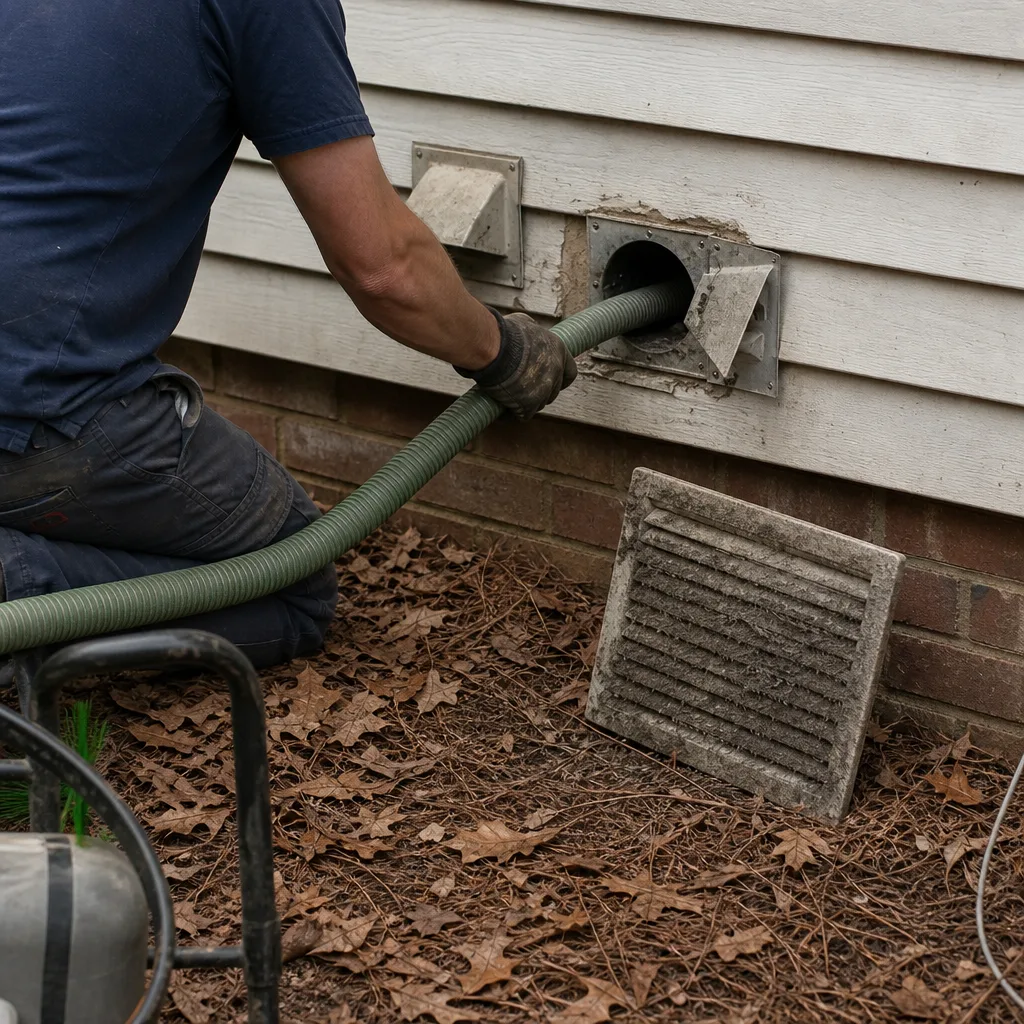 Before
 After
After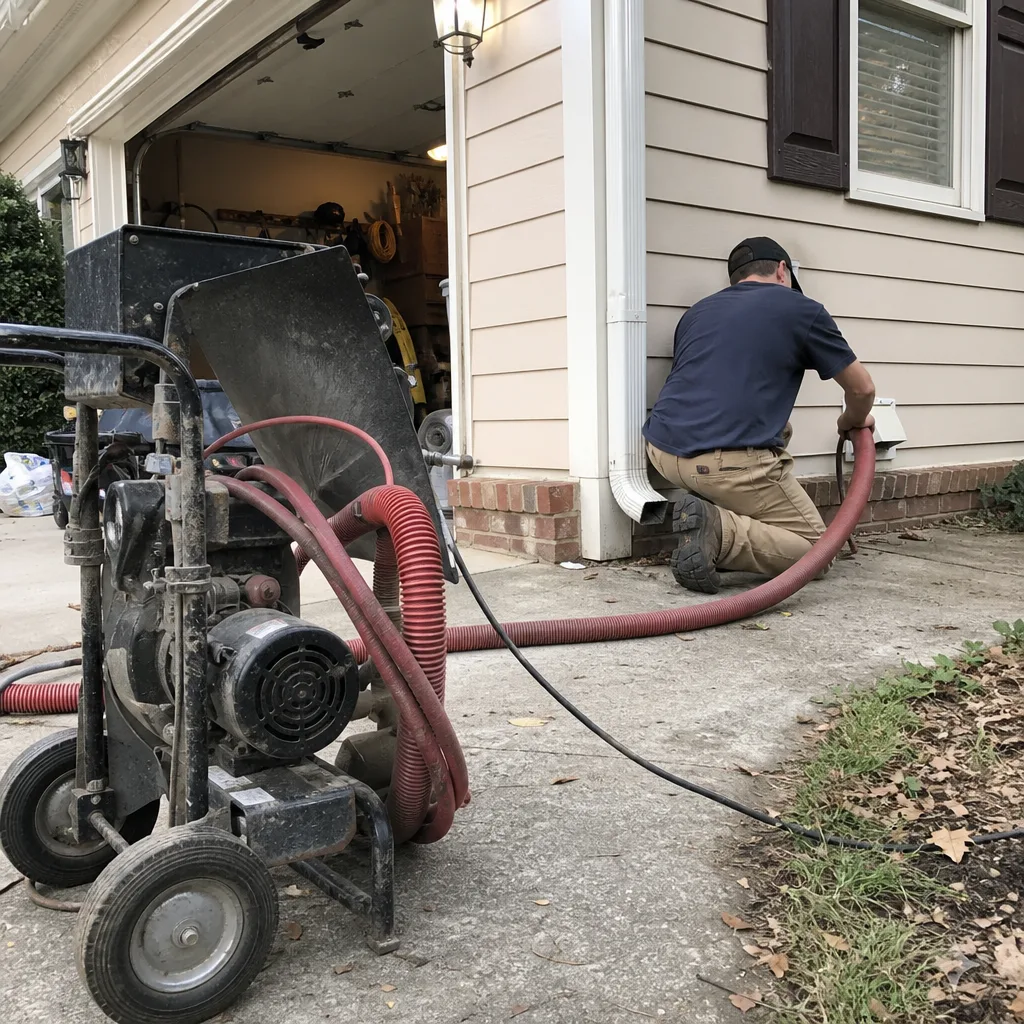 Before
 After
After