
Last updated October 15, 2026
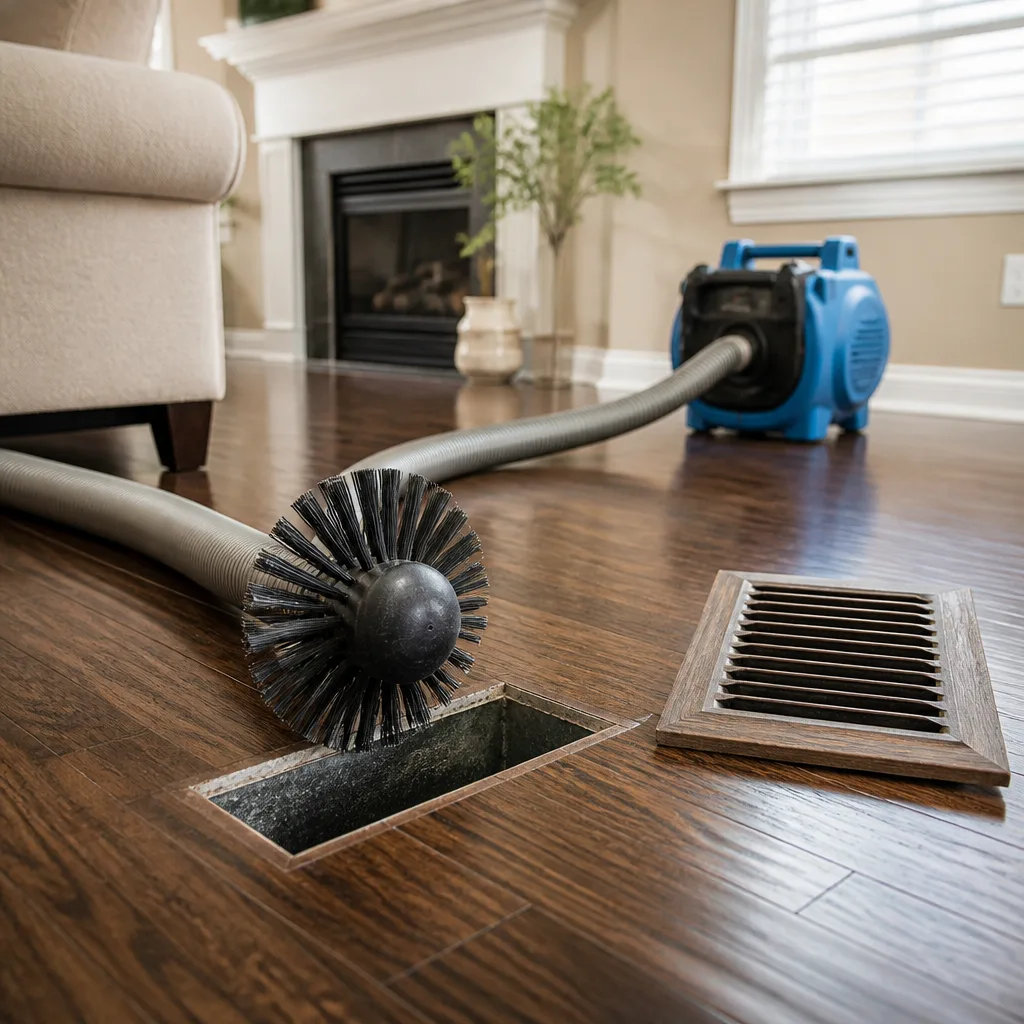 Whole-home duct cleaning
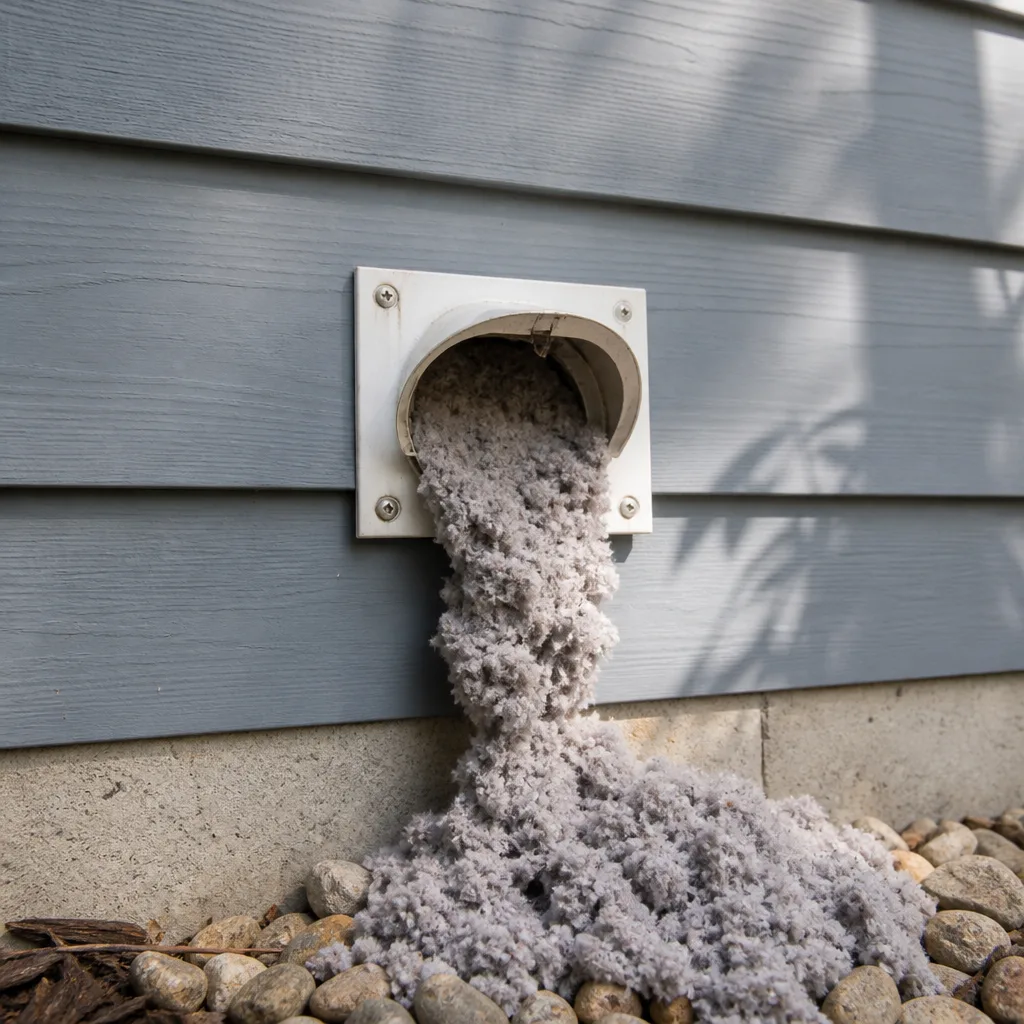 Dryer vent cleaning
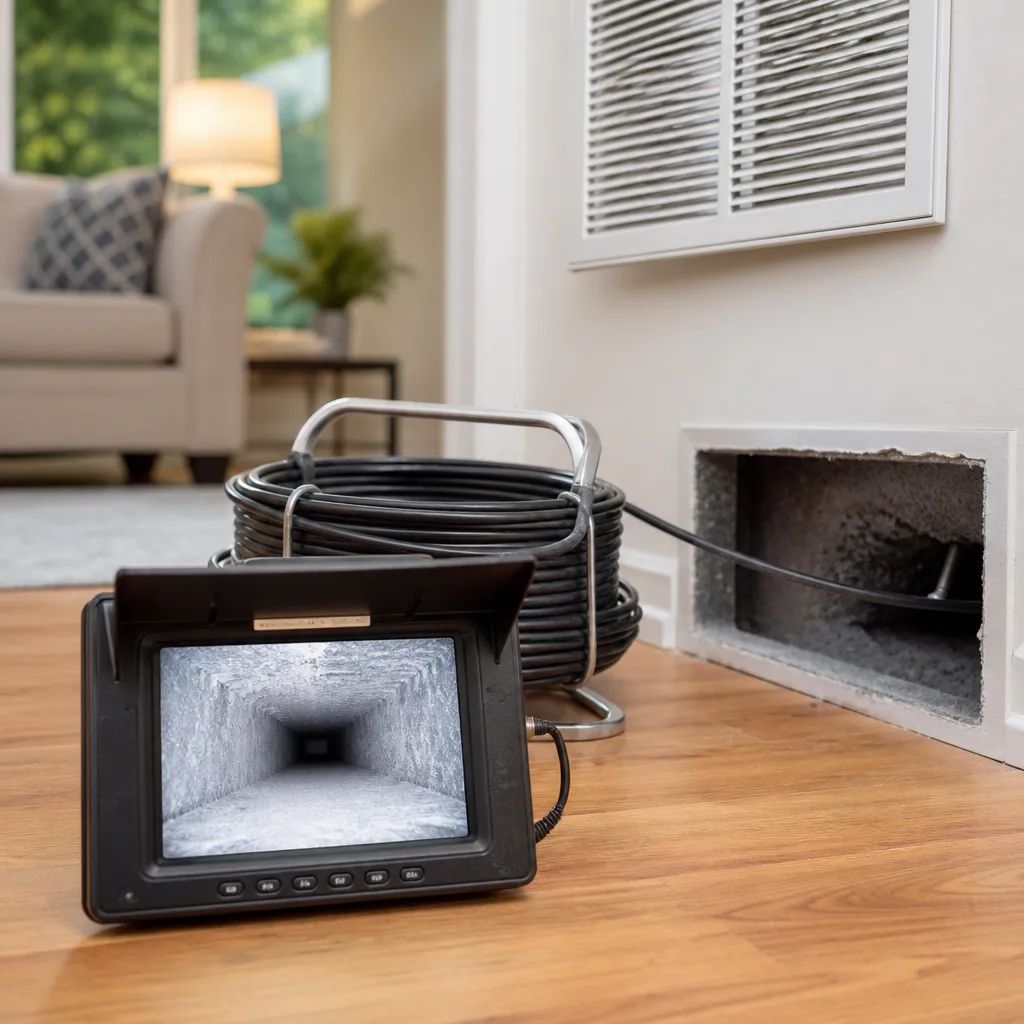 Camera inspection
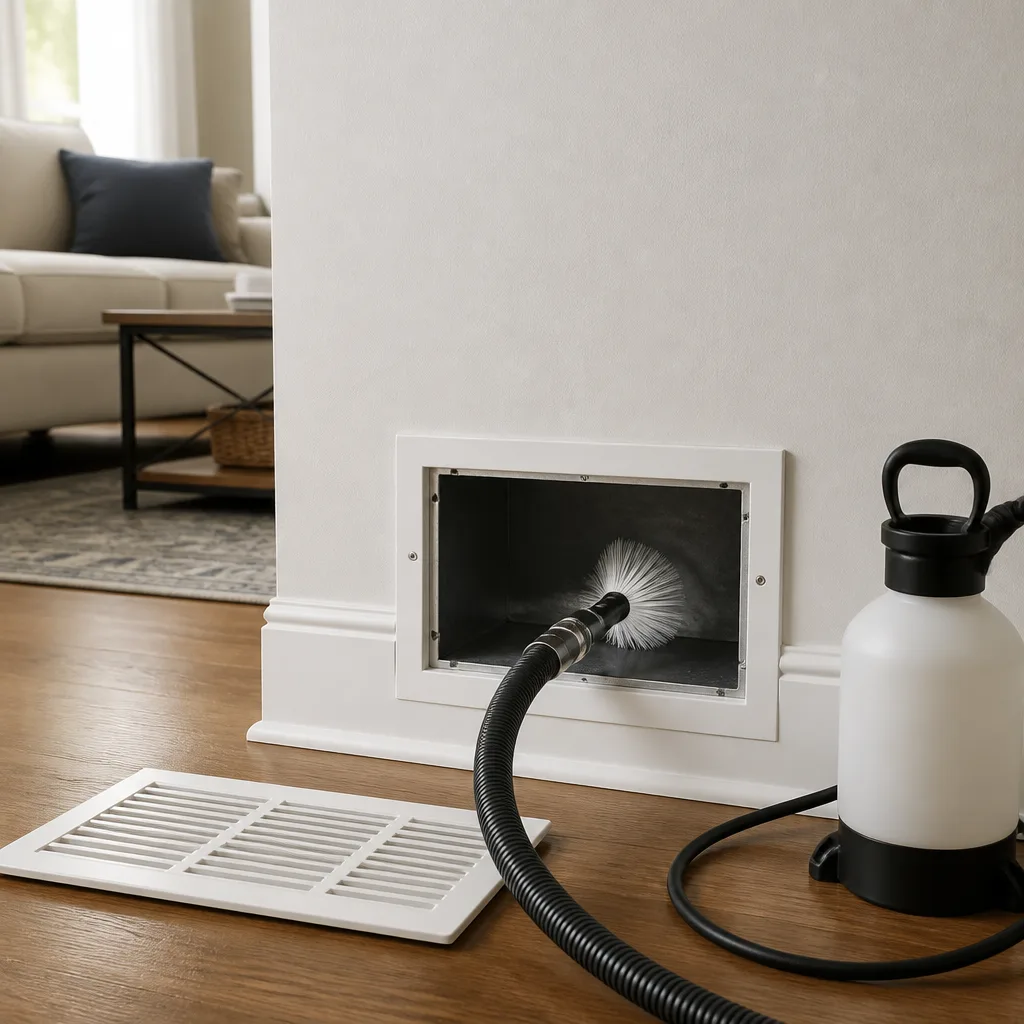 Sanitizing & deodorizing
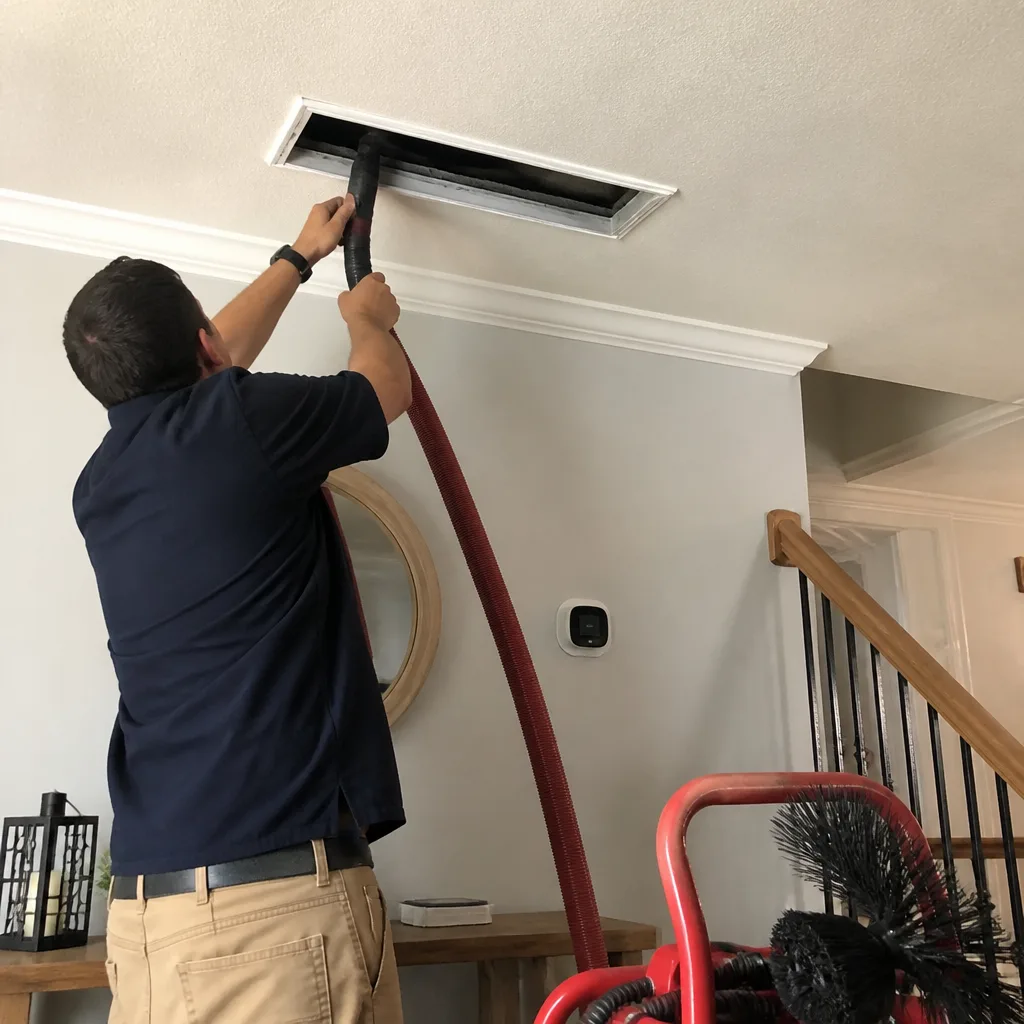
Whole-system duct and dryer vent check with before-and-after photos - you see exactly what came out of your vents
That "$99 whole-house special" is a bait ad - the real number appears once they are in your hallway, or the "clean" is a shop-vac at the register. We photograph the inside of your ducts before and after instead.
Air Duct Cleaning Permits, Codes & Inspections in GA: What You Need to Know
Here’s the counterintuitive reality most Alpharetta homeowners discover too late: the air duct cleaning itself rarely triggers a permit, but the discoveries made during that cleaning often do. A disconnected duct run, a crushed return plenum, a six-foot section of flex duct that needs replacement, or mold that requires remediation. Each of those moves the job from “routine maintenance” into a category where Georgia’s mechanical codes, Fulton County’s building department, and your homeowner’s insurance policy all take an interest. This guide-along with our The Complete Guide to Air Duct Cleaning in Alpharetta-draws the exact line between what’s a cleaning and what’s a modification, so you never find yourself explaining an unpermitted alteration during a home sale or an insurance claim.
Quick Answer
Air duct cleaning itself does not require a permit anywhere in Georgia, including Alpharetta and Fulton County. However, the moment a technician cuts into ductwork to install an access panel, replaces a section of duct, re-routes a run, or performs mold remediation, that work falls under Georgia’s mechanical code and typically requires either a licensed contractor, a permit, or both. For a routine cleaning with no modifications, no permit is needed and no inspection is required.
Styles & brands we work with
Table of Contents
- Where Georgia Draws the Line: Cleaning vs. Modification
- Georgia Mechanical Code: The Specific Sections That Matter
- Alpharetta and Fulton County: What’s Different Here
- Mold in Ductwork: What Georgia DCA Rules Trigger
- Documentation and Insurance Claims: What Your Policy Expects
- Questions to Ask Any Contractor About Code Compliance Mid-Job
- Access Panels: The Most Common Unpermitted Work We See
- Home Sales and Inspections: Why Paperwork Matters at Closing
Where Georgia Draws the Line: Cleaning vs. Modification
The easiest way to understand Georgia’s position is to think about what the code actually regulates. The International Mechanical Code, which Georgia adopts with state-specific amendments, governs the installation, alteration, and repair of mechanical systems. Cleaning is none of those things. Running a Rotobrush or Nikro agitation system through existing ductwork, vacuuming out debris, and sanitizing surfaces with an EPA-registered product doesn’t alter the system’s design, dimensions, or connection points. It leaves the ductwork exactly as it was, just cleaner. No permit required.
But here’s where the line gets sharp and specific. If a technician discovers that a section of flex duct has collapsed or separated at a joint, and that section needs to be cut out and replaced with new material, that’s a repair. Repairs to ductwork in Georgia fall under the mechanical code’s permitting requirements when they exceed what the code calls “minor repair work.” The threshold Georgia uses, drawn from Section 105.2 of the International Mechanical Code, exempts work that is limited to the replacement of parts that don’t alter the system’s approval or make it less safe. Replacing a six-inch section of damaged flex duct with an identical six-inch section is arguably exempt. Replacing it with a different diameter, a different material, or re-routing it is not.
In our experience serving Alpharetta for nearly two decades, the most common crossover point is the access panel. Older homes in the Crabapple and Windward areas often have duct systems that were installed without any access points for inspection or cleaning. The moment a technician cuts a hole in the plenum or trunk line to insert a cleaning tool, that’s a modification. It requires the panel to be fabricated, sealed, and fastened to code, and depending on where the home sits, that work may need a permit.
Georgia Mechanical Code: The Specific Sections That Matter
Georgia operates under the International Mechanical Code with state amendments adopted by the Georgia Department of Community Affairs. The state updates its construction codes on a cycle, and as of this writing, Georgia is enforcing the 2018 International Mechanical Code with Georgia Amendments. That’s a meaningful distinction because neighboring states like Florida and Tennessee are on different cycles, and what a contractor knew from a previous state may not apply here.
The sections most relevant to air duct work are these:
- Section 105 – Permits: Establishes that permits are required for mechanical work except where exemptions apply. The exemption for “minor repairs” is narrow. It covers replacement of parts that don’t alter the system. A cleaning is not even a repair, so it sits outside the permit question entirely. But a duct replacement, even a short run, is a repair, and it only qualifies for the exemption if the replacement part is the same in every material respect.
- Section 603 – Duct Construction and Installation: Sets the standards for how ductwork must be fabricated, supported, and sealed. When a section of duct is replaced or a new access panel is installed, this section governs the materials, the fastening method, the sealing requirements, and the minimum gauge for sheet metal. A panel that’s cut and screwed in with no mastic or foil tape seal is a Section 603 violation, and it will show up on a home inspection report.
- Section 606 – Smoke Detection Systems Control: Requires that duct-mounted smoke detectors in commercial and some larger residential systems be reinstalled and tested after ductwork has been opened. This rarely applies to single-family homes in Alpharetta, but it matters for larger properties and any home with a zoned system that includes smoke detection in the return air path.
What a homeowner needs to understand is that Georgia’s code is concerned with the system’s safety and integrity, not with paperwork for its own sake. The reason a duct modification triggers a permit is that an improperly sealed access panel can draw attic air, combustion gases, or pest debris into the living space. That’s not a hypothetical concern in Alpharetta, where summer attic temperatures regularly exceed 130 degrees and the air drawn into a return leak is hot, humid, and full of whatever lives in the attic.
Alpharetta and Fulton County: What’s Different Here
Georgia is a home-rule state, which means the building department that governs your address depends on whether you live inside Alpharetta city limits or in unincorporated Fulton County. The distinction matters more than most homeowners realize. Alpharetta operates its own building and code enforcement division, issues its own permits, and conducts its own inspections. Unincorporated Fulton County does the same through a separate department with separate procedures. A contractor who pulls permits regularly in one jurisdiction won’t necessarily have the same institutional familiarity with the other.
The practical difference we see in the field comes down to access panels. Alpharetta’s code enforcement staff tends to interpret a new access panel on existing ductwork as an alteration that requires a permit when the panel is cut into a metal plenum or trunk line. We’ve seen inspectors in Alpharetta flag unpermitted access panels during final inspections of unrelated renovation work. Fulton County, by contrast, has historically taken a more lenient view for simple panel installations on flexible duct, provided the panel is properly sealed and doesn’t compromise the duct’s integrity. Neither jurisdiction requires a permit for cleaning alone, and neither requires an inspection after a cleaning. The line is drawn at physical modification, and the location of that line shifts slightly depending on which department is reviewing the work.
Why does this matter to a homeowner selecting a duct cleaning company? Because if a company quotes you $399 for a cleaning and then cuts three access panels into your trunk line to get their tools in, they’ve just performed work that Alpharetta may consider unpermitted modification. That unpermitted work becomes your problem at closing, and we’ve watched sales nearly fall apart over exactly that discovery. A company that plans the cleaning around existing access points, or that tells you upfront when a panel is required and how it will be permitted, is operating with a level of care that protects your resale position.
Mold in Ductwork: What Georgia DCA Rules Trigger
Mold is where Air Duct Cleaning Warning Signs: A Alpharetta Homeowner’s Reference Guide and building codes take on a different character. Georgia’s Department of Community Affairs doesn’t license mold remediators separately from other contractors, but it does impose standards on how mold remediation is performed in residential structures, and those standards become enforceable when the remediation is part of a permitted project or when a home sale triggers a disclosure obligation.
Here’s the scenario we see most often in Alpharetta homes with high-efficiency HVAC systems: the evaporator coil sits in a dark, cool cabinet where condensation is constant. Over time, microbial growth develops on the coil, the drain pan, and the first few feet of supply duct. A routine cleaning that removes surface debris is not the same as remediation. Remediation means removing the growth and treating the surfaces to prevent recurrence, and in Georgia, the standard of care for that work is guided by the IICRC S520 standard, which Georgia DCA references in its mold guidance. The work should include source removal, not just spraying a biocide, and the contractor should document the before and after conditions.
What triggers a permit in the mold context is any physical alteration made to access the mold. If the technician must cut open a section of duct to reach contaminated surfaces, that’s the same access-panel question as before, with the added complication that Georgia’s property disclosure laws require sellers to disclose known mold conditions. If the remediation is done improperly, the buyer’s home inspector will find the evidence, and the seller will face a disclosure problem that didn’t exist before the cleaning. The takeaway for Alpharetta homeowners: if mold is found during a duct cleaning, the right move is to have the cleaning company document everything, recommend remediation in writing, and let you decide whether to proceed before any cutting happens.
Documentation and Insurance Claims: What Your Policy Expects
Your homeowner’s insurance policy is a contract, and like any contract, it rewards documentation. The reason air duct cleaning documentation matters for insurance purposes is that many claims involving HVAC systems hinge on questions of maintenance versus sudden damage. A compressor that fails after years of neglect is a maintenance issue. A compressor that fails because a collapsed duct run starved the system of airflow is arguably a covered loss, but only if you can prove the collapsed duct existed and was discovered through a documented process.
The documentation we provide after every job includes a written record of what was found in the system, the condition of key components, and in most cases, photos. If a Rotobrush-powered cleaning reveals that a return duct in a crawlspace has been crushed by shifting piers, that’s a documentable condition. If the HVAC system fails six months later and the cause is traced to restricted airflow from that crushed return, your insurance adjuster will want to see that the condition was identified and that you were advised to address it. Without documentation, you’re arguing a maintenance claim. With it, you’re arguing a covered claim based on a documented system defect.
This is also where the no-hassle upfront pricing model matters. When the written price you received before work started matches the invoice you received after, that consistency becomes part of your file. When an insurance adjuster asks for the cleaning history, you hand over a stack of consistent, dated documents that tell a coherent story about how the system has been maintained. That’s not just good recordkeeping; it’s the difference between a claim that gets approved and one that gets referred to a subrogation review.
Questions to Ask Any Contractor About Code Compliance Mid-Job
The moment a technician finds something unexpected in your ducts, a clock starts. The decisions made in the next ten minutes determine whether you end up with a code-compliant system or an unpermitted modification that haunts you at resale. The right questions to ask, in order, come down to this:
- “Does this require a permit in Alpharetta or Fulton County?” A licensed contractor should know the answer without hedging. If they say “we’d have to check,” that’s fine, but hold them to it. Get the answer in writing.
- “Is the work you’re about to do considered a repair or an alteration?” Repairs that replace like-for-like are usually exempt from permits. Alterations that change the system’s design, size, or routing are not. The distinction determines everything that follows.
- “Who pulls the permit if one is needed?” In Georgia, the contractor doing the mechanical work pulls the permit. A homeowner can pull their own permit, but when they do, they assume the liability for the work meeting code. You want the contractor pulling it.
- “What will you document before and after the modification?” Photos, a written description of the work, and a statement of code compliance. If the contractor can’t or won’t document, that’s a signal.
- “How will the access panel be sealed?” The answer should reference mastic and foil tape, not just screws. A panel that’s screwed in without sealing will leak, and that leak will show up as a home inspection finding.
When we encounter a discovery mid-job at a home in Alpharetta, the process is the same every time. We stop. We show the homeowner what we found, either in person or with photos from the camera system we run through the ducts. We explain what the options are, what each option costs in writing, and what the code implications are. Then we let the homeowner decide. No work happens that wasn’t agreed to in advance.
Access Panels: The Most Common Unpermitted Work We See
Access panels exist because duct systems need to be maintained. Over the life of a system, coils need cleaning, ducts need inspection, and equipment like cameras and rotating brushes need entry points. The problem is that many homes built before the 2000s in Alpharetta’s older neighborhoods, particularly around downtown and the Historic District, were designed with duct systems that have no access points at all. The designer assumed the system would be replaced, not maintained.
When a duct cleaning company encounters a system with no access, they have three options. They can clean through the register openings, which limits their reach and effectiveness. They can cut an access panel, which solves the access problem but creates a modification. Or they can tell you the system needs a panel installed by a licensed mechanical contractor and schedule that work separately. The third option is the most code-compliant, but it’s also the one that means the cleaning can’t be completed the same day, which is why some companies choose the second option without telling you.
An access panel that is properly installed, with a fabricated metal frame, a removable cover, and a mastic-sealed seam, is a legitimate and useful modification. It’s the kind of thing that should be permitted when required and documented always. An access panel that is roughly cut, screwed in place, and sealed with duct tape is a code violation waiting to be discovered. In our experience, the quality of the access panel work is one of the best signals of how seriously a company treats the rest of the job.
Home Sales and Inspections: Why Paperwork Matters at Closing
The Alpharetta real estate market moves fast, and in a fast market, buyers sometimes waive contingencies that would normally catch problems. But home inspections are still the standard, and a good home inspector knows exactly what to look for in a mechanical system. Unpermitted duct modifications are one of the most common findings on Alpharetta inspection reports, and they have an outsized impact on the deal because they’re a known unknown. The buyer’s lender may flag the unpermitted work. The buyer’s insurance company may ask questions at underwriting. And the seller is suddenly faced with a repair that should have been addressed years earlier.
The best defense is a paper trail. Every time your ducts are cleaned, keep the documentation. Every time any work is done on the system, request the permit if one was pulled, and keep a copy. When a future buyer asks about the system’s history, you hand them a folder with records that show consistent maintenance and code-compliant modifications. That’s the difference between a sale that closes on time and one that stalls while everyone figures out whether a $200 access panel installed without a permit is a dealbreaker.
One more thing to consider: Georgia requires sellers to disclose known material defects. A duct system that has been modified without permits is arguably a material defect, and failing to disclose it creates liability. If the work was permitted and documented, there’s nothing to disclose beyond the fact of the work. Documentation converts a potential liability into a neutral fact.
Common Mistakes to Avoid
- Hiring the lowest bidder without asking about permits. The $299 whole-house cleaning quote becomes a $1,200 unpermitted duct modification problem when the crew cuts access panels without telling you. Ask upfront how the company handles access issues and whether they pull permits when required.
- Assuming a cleaning company is licensed for mechanical work. Air duct cleaning is not a licensed trade in Georgia, but duct modification is. A company can be excellent at cleaning and entirely unqualified to cut into your plenum. Ask who handles modifications before any cutting happens.
- Ignoring the documentation. The invoice that says “cleaned all ducts” is not documentation. You want a record of what was found, what was done, and what condition the system was left in. That specificity is what carries weight with an insurance adjuster or a home inspector.
- Allowing mold treatment without source removal. Spraying a biocide into a contaminated duct without removing the contamination is not remediation, and it can actually make the problem worse by dispersing dead mold spores through the living space. Georgia’s DCA guidance expects source removal, and so should you.
- Treating access panels as a non-issue. In Alpharetta, a poorly sealed access panel is the gift that keeps on giving. It leaks conditioned air, it draws attic air, and it eventually shows up on an inspection report as a system defect. Get it done right or don’t get it done at all.
See the difference
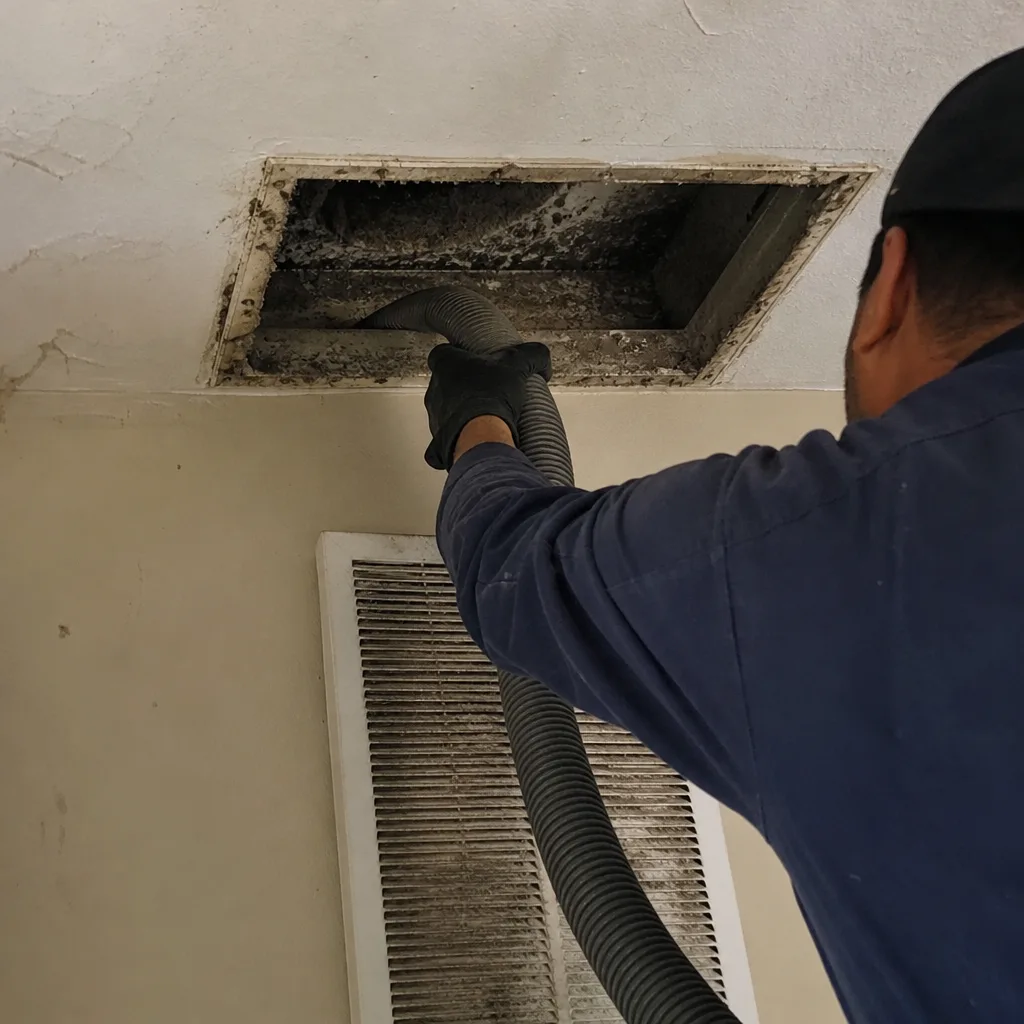 Before
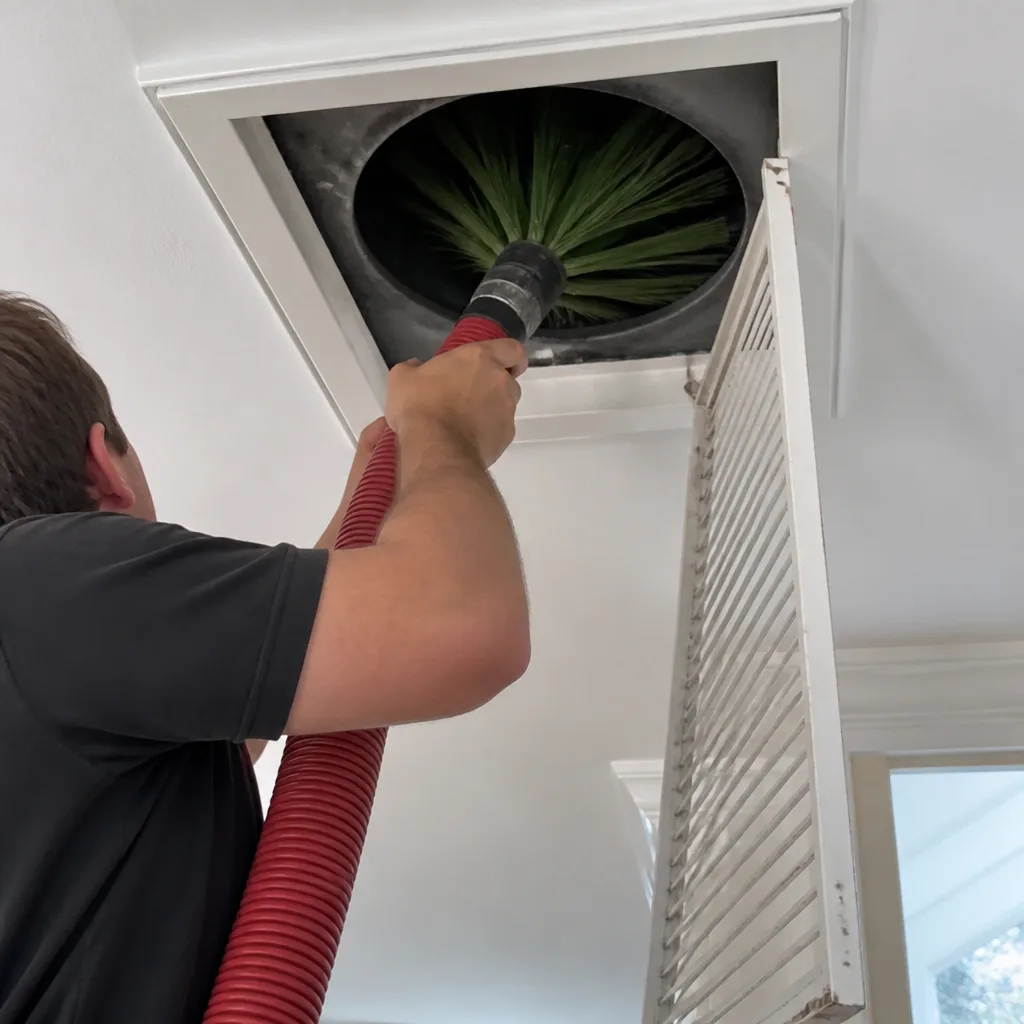 After
After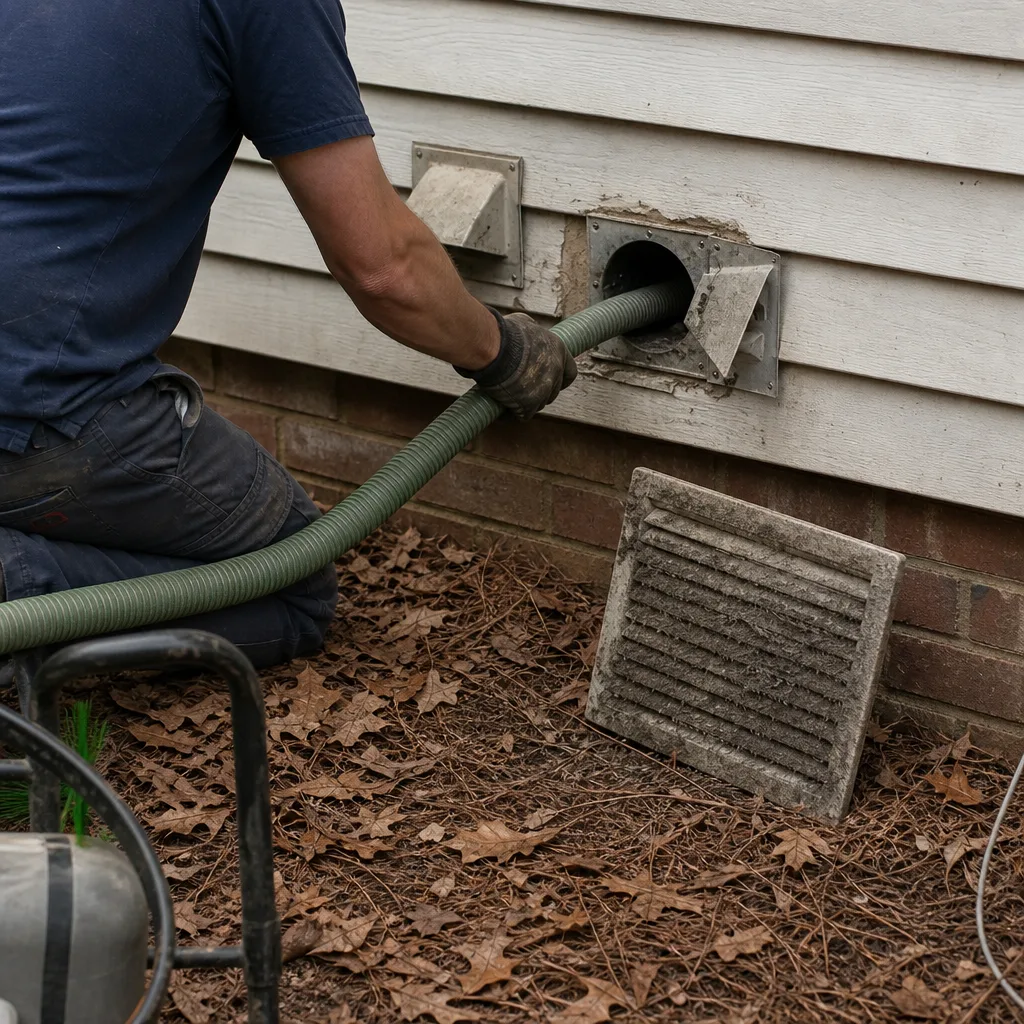 Before
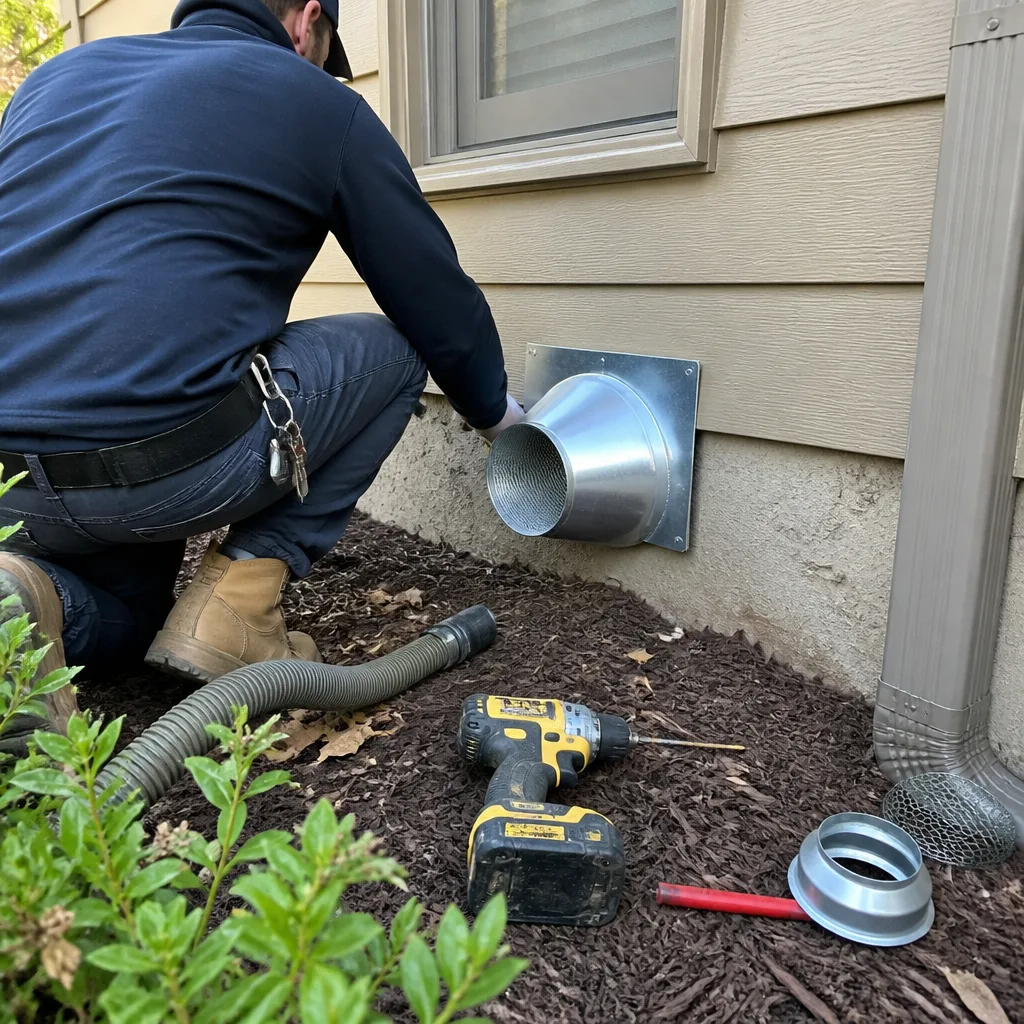 After
After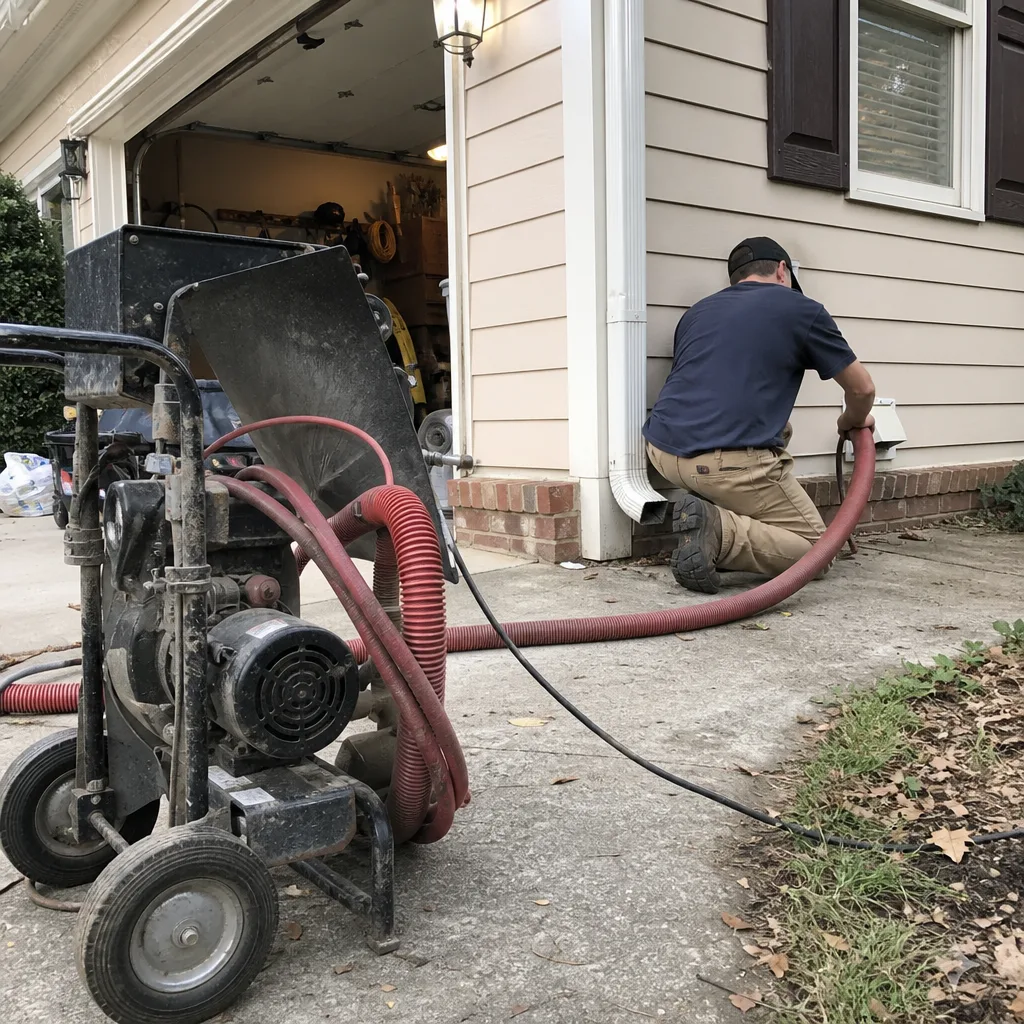 Before
 After
AfterWhen to Call a Professional
If your home has never had its ducts cleaned and the system is 10 years old or more, a professional inspection is the right first step. If you can see dust at the register openings or smell a musty odor when the system runs, those are signals that the ducts need attention. If you’re buying or selling a home in Alpharetta and the inspection report flags anything related to the duct system, you need a professional who knows where the code lines sit. And if you’ve been living with a system that has visible tape repairs, sagging flex duct in the attic, or a return that pulls air from the crawlspace, it’s time. Mortons Air Duct Alpharetta offers Air Duct Cleaning with free estimates in Alpharetta and the surrounding area. Call (762) 263-0408 and we’ll talk through what your system needs, what it will cost, and what documentation you’ll have when we’re done.
Frequently Asked Questions
No permit is required for air duct cleaning alone anywhere in Georgia, including Alpharetta and Fulton County. A permit enters the picture only if the cleaning leads to duct modification, such as cutting an access panel, replacing a section of duct, or re-routing a run. For a routine cleaning with no modifications, you’re done when the crew leaves. Call (762) 263-0408 for a free estimate in Alpharetta.
Cleaning removes debris from existing ductwork without changing its size, shape, materials, or connection points. Modification changes any of those things. Georgia’s mechanical code exempts maintenance and cleaning from permitting but governs modifications, and the distinction turns on whether the work alters the system’s approval or safety. If a technician proposes cutting into your ducts, ask whether the work is permitted and who will pull the permit.
Alpharetta’s code enforcement tends to treat access panels cut into metal plenums or trunk lines as alterations requiring a permit, while Fulton County has historically been more lenient for simple panel installations on flexible duct, provided the panel is properly sealed. Neither jurisdiction requires a permit for cleaning alone. The safest approach in either jurisdiction is to ask the contractor to pull a permit whenever a panel is cut into metal ductwork.
Mold remediation in ductwork doesn’t require a separate mold license in Georgia, but any physical modification made to access the mold, such as cutting open ducts, falls under the same permit threshold as any other duct modification. Georgia DCA guidance references the IICRC S520 standard, which calls for source removal and documentation. If mold is discovered during a cleaning, the work should stop until you’ve approved a written remediation plan. Call (762) 263-0408 for guidance on Alpharetta mold-in-duct situations.
Keep the invoice, any written findings from the technician, and before-and-after photos of the system. The documentation should describe what was found, what was cleaned, and what condition the system was left in. If a defect is discovered, such as a collapsed duct or a disconnected run, the documentation should record it and note that you were advised. This paper trail is what separates a covered insurance claim from a denied maintenance claim.
The home inspector will flag unpermitted duct modifications, and the buyer’s lender or insurance company may ask questions. You’ll know it the same way you know about any other unpermitted work: it shows up in the inspection report. The best way to prevent this is to work with companies that document their work, pull permits when required, and provide you with a record you can hand to the next buyer. That folder of paperwork is worth more than any closing credit.
The Bottom Line
Air duct cleaning in Georgia doesn’t require a permit, but the discoveries made during cleaning often lead to work that does. The line sits at modification: cutting into ducts, replacing sections, re-routing runs, and remediating mold all trigger code considerations. Alpharetta and Fulton County apply these rules slightly differently, so the contractor you hire needs to know both jurisdictions. Documentation is your insurance against insurance disputes and closing surprises. For more guides & resources, visit our blog. And the most important question you can ask any contractor is the one most homeowners never think to ask: what happens if you find something unexpected inside my ducts? When the answer is “we stop, we show you, we explain your options in writing, and we wait for your decision,” you’ve found the right company. Mortons Air Duct Alpharetta has served Alpharetta since 2005 with equipment from Rotobrush and Nikro, written pricing before any work starts, and a 365-Day Done Right Promise on every job.
Written by Paul Adeyemi, Owner at Mortons Air Duct Alpharetta, serving Alpharetta since 2005.